Estimated reading time: 7 minutes
The first article in this series explained the importance of a healthy water cycle in helping as much rainwater as possible to seep into the soil. The second article highlighted the role that veld condition plays in the water cycle and its importance for maximum veld production and feed quality.
Many of South Africa’s livestock farms are home to historical resource damage, leading to a large percentage of rainwater being lost due to runoff. This includes exposed soil or bare patches that have little or no vegetative cover, areas with severe water erosion damage, and invasive shrubs and dense encroachers that rob grazing veld of water.
Rehabilitation cannot take place utilising normal grazing practices; it therefore requires specific measures known as radical veld improvement.


Restoration of exposed soil
Wind and water erosion strips away the topsoil of bare patches, exposing the rock-hard subsoil with its low water infiltration ability. This dries out the soil, leaving almost no space in which seedlings can take root to improve soil cover.
The first step in the rehabilitation process is to restore the soil’s hydrology. This is done by loosening the soil’s impermeable top layer to promote water infiltration. This can be achieved in several ways, depending on certain factors of which the most important are the condition of the exposed soil (hardness and depth) and size of the bare patches.
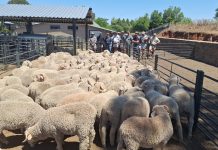
Topsoil can be broken up by concentrating a large number of livestock on the area for a short period of time, but only if the bare patches are relatively small and the topsoil can be loosened by the animals’ hoof action.
Read the second article of the climate-smart series.


Another method that offers excellent results under the same conditions is the use of organic matter, such as garden refuge, hay and well-rotted kraal manure, to cover bare spots. Round hay bales work particularly well. These bales can be unrolled like rolls of cotton wool to provide excellent organic matter cover, and often contain viable seeds that can lead to seedling establishment.
In the case of large bare patches and soil that is too hard to be loosened through hoof action alone, mechanical methods must be applied using implements designed to break up soil. Two well-known implements are the scallop and butting ploughs.
The butting plough is an excellent all-rounder in terms of soil type and is recommended for use instead of the scallop plough for soil with a high silt content. It consists of a chisel plough, or ripper, that is equipped with two ploughshares on either side. The coulter at the bottom rips up the hard soil while the ploughshares form furrows in which rainwater can accumulate and seep into the soil.
Once the hydrology of the bare areas has been restored, it may be necessary to sow grazing plants. Seeds from the more familiar grass species are widely available, but seeds from Karoo shrubs are scarce and only available in a few locations, including the Worcester Veld Reserve and Renu-Karoo in Prince Albert.
Given the high cost of seed, it should only be planted if there is not enough naturally occurring seed in the system.

Water erosion rehabilitation
Several technologies can be applied in a bid to rehabilitate water erosion-damaged soil. However, none of these will be effective if the cause of water erosion is not addressed first, and if erosion still actively occurs. This process sometimes requires large and expensive erosion works – for example, inverted contours and large dams, the building of which only the state can fund.
This article focusses only on low-cost methods the producer can set up by him- or herself. These methods all work according to the same principle – slowing down the water flow rate, without stopping the flow or causing the water to accumulate. By slowing the flow of water, the silt in the stormwater is deposited in the eroded area, gradually filling it with soil until it is fully rehabilitated.
Gabions, or barricades, can be used to repair erosion ditches. They are not dam walls as many people tend to think. The water must still be able to flow through the gabion’s rocky structure. It simply slows down the water flow rate, which allows for the silt to be deposited.
The help of a specialist must be called in to plan the gabions’ dimensions and execute their placement. Poorly planned and placed gabions can exacerbate water erosion, instead of rehabilitating it.
Other methods involve packing old tyres, tree branches or flat stones to slow down the flow of water – not to stop its flow altogether. The secret is to gradually increase the height of these obstacles as the area behind the tyres, branches or rocks is filled with silt after each rainstorm.
Bush management
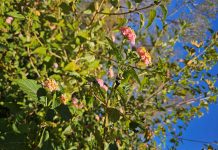
With their extensive root systems, woody plants can rob grazing plants of the available rainwater in the soil. The Karoo has several species known to be problematic, including mesquite, three-thorn, Lycium (kriedoring),wild rosemary (kapokbos), resin bush (harpuisbos), Scholtzbos and wild asparagus (katbos).
The coastal areas of South Africa are plagued by several invasive alien species, including red-eyed wattle (rooikrans) and various other wattle species. The most common invaders in the savannah areas are sweet thorn, umbrella thorn (withaak), black thorn (swarthaak), three-thorn, camphor bush (vaalbos), sickle bush and mopane. Bankrupt bush and wild asparagus are a growing problem in the wetter grassland areas, while sweet thorn is a serious encroacher in the Eastern Cape.


Bush control methods include controlled veld fires, manual clearing, mechanical removal using rollers and earthmoving equipment, chemical control using herbicides, and biological control. A few decades ago, when land was still relatively cheap, the cost of bush control exceeded the value of the land. Rather than applying bush control, producers bought land instead. Today, the cost of control in most cases is lower than the cost of land, and bush management therefore makes economic sense.
Some people believe that chemical control causes a complete loss of all woody plants. By applying the correct active ingredients at the correct concentrations, however, bush encroachment can be controlled very selectively. Consult an expert in this regard.
South African livestock producers are faced with many challenges such as drought, climate change and global warming. A good starting point to overcome these challenges is to make every drop of rainwater count. Radical veld improvement, as well as the rehabilitation of historical damage to the environment, will help grazing to effectively utilise rainfall. – Dr Louis du Pisani, independent agricultural consultant
For more information and references, contact Dr Louis du Pisani on 082 773 9778 or Ldupisani@gmail.com.