Estimated reading time: 4 minutes
- Several fly species negatively affect cattle productivity, including biting flies and non-biting flies.
- Face flies are also important disease vectors in cattle, with pink eye being the most common disease.
- Horn flies are biting, blood-feeding flies that remain on cattle for nearly their entire life cycle, ingesting some 30 blood meals per day.
- The first critical control point is the fly breeding environment.
- The second key aspect of fly control is the protection of animals, particularly grazing cattle.
Flies and blowflies pose a significant threat to livestock health and productivity. They can contribute to poor weight gain, reduced milk production, and disrupted grazing patterns that lead to inadequate nutrient intake. They also act as carriers of microbes, bacteria, and fungi, contaminating equipment, feed, and eggs through their vomit or faeces. Dr Louis Boag, head of sales (ruminants) at Elanco South Africa, says cattle producers often underestimate this threat.
Flies are cold-blooded and rely on heat for survival and reproduction. As mechanical vectors, they spread pathogens via their bodies and legs. Effective, sustainable control requires a proactive, comprehensive strategy rather than simply reacting to infestations. Dr Boag explains that Elanco promotes a holistic approach to fly control, combining their range of products with management practices designed to reduce fly populations and minimise disease risks.
Impact on cattle productivity
Several fly species negatively affect cattle productivity, including biting flies (horn and stable flies) and non-biting flies (face and house flies). Grazing cattle are particularly affected by face and horn flies, which have significant impacts on livestock production and welfare.
House flies reproduce rapidly in manure, especially during warm months. They cause irritation by feeding on eye and nasal secretions, as well as open wounds. Their feeding and reproduction behaviour and structure of their legs and mouthparts facilitate the transmission of infections. In addition to these direct physical effects, house flies serve as mechanical vectors for numerous pathogens and diseases, including pink eye, salmonellosis, campylobacteriosis, and mastitis.
Smaller than house flies, face flies are also important disease vectors in cattle, with pink eye being the most common disease. Pink eye can result in increased treatment costs, loss of vision in calves, reduced bull productivity, and the early culling of affected cows.
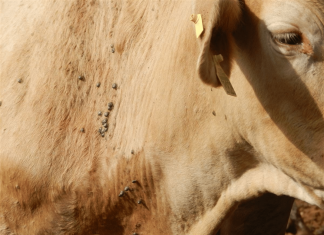
Horn flies are biting, blood-feeding flies that remain on cattle for nearly their entire life cycle, ingesting some 30 blood meals per day. Their bites cause severe irritation, leading to reduced weight gain and milk production. If horn flies are not effectively controlled, losses of 4,5 to 7kg in weaning weights can occur.
Stable flies are also blood-feeding, biting flies that cause pain and discomfort. The saliva injected during their bites contains compounds that suppress the animal’s immune response, increasing susceptibility to tickborne diseases as well as bacterial, viral, and protozoan infections.
Effective fly control
According to Dr Boag, effective fly control requires multiple control points. If not properly managed, flies can cause weight losses of up to 9kg per animal, leading to direct reductions in production and profits.
The first critical control point is the fly breeding environment. Face flies and horn flies lay their eggs in fresh manure, which provides an ideal breeding ground. Adding a feed-based larvicide or insect growth regulator (IGR) to feed or mineral supplements can kill larvae and prevent eggs from hatching. IGRs are most effective when applied early in the season, typically when magnesium is added to minerals to prevent grass tetany.
Several IGRs available in South Africa can be incorporated into an integrated fly control strategy. These agents disrupt the normal life cycle of insects, specifically targeting growth and development. By affecting early stages such as larvae or nymphs, they prevent insects from moulting and reaching adulthood. Some IGRs even inhibit embryonic development, stopping eggs from hatching. These agents target specific physiological processes in insects and have minimal impact on adult flies, making them safer for non-target species, including aquatic organisms.
Novaluron is a commonly used IGR found in some liquid larvicides and feed supplements. It inhibits the synthesis of chitin, a vital component of an insect’s exoskeleton. Products containing Novaluron can be added to feed or mineral supplements. It passes through the animal’s digestive system and is excreted in the manure, where it destroys fly larvae. This method provides long-term preventive control by effectively suppressing emerging fly populations.
Animal protection
The second key aspect of fly control is the protection of animals, particularly grazing cattle. This can be achieved using sprays, pour-ons, and dips that repel biting and nuisance flies, such as face and horn flies, and help prevent infestations. Certain products also provide protection against screwworm, which is especially common in warm, wet conditions.
House flies in stables, dairies, and other farm buildings can be managed using insecticides with contact and stomach action. These products attract both male and female flies, offer long-lasting effects, and are available as water-dispersible paints or sprays.
– Christal-Lize Muller, Plaas Media
For more information, contact Dr Louis Boag at louis.boag@elancoah.com or Elanco Animal Health at 086 135 2626.