Estimated reading time: 7 minutes
Cape Wools SA has released a summary following the close of the 2024/2025 wool season, sharing statistics such as regional wool production, the wool market and sales, as well as exports.
Lees meer hier oor die Grootfontein Dohne-kudde.
Overview summary
The 2024/25 wool season presented a mixed performance for the South African wool industry, shaped by external market conditions and regional challenges. Total wool receipts declined by 1,9% compared to the previous season largely due to prolonged drought conditions in certain areas and subdued market sentiment, prompting some producers to withhold their clips from sale.
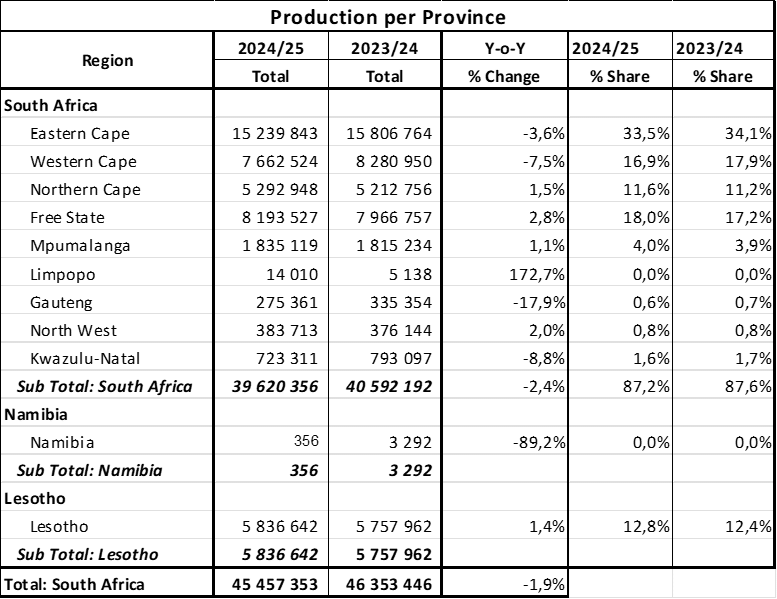
Despite these setbacks, the Eastern Cape retained its position as the country’s leading wool-producing province, contributing 33,5% of total receipts, followed by the Free State (18%) and the Western Cape (16,9%).
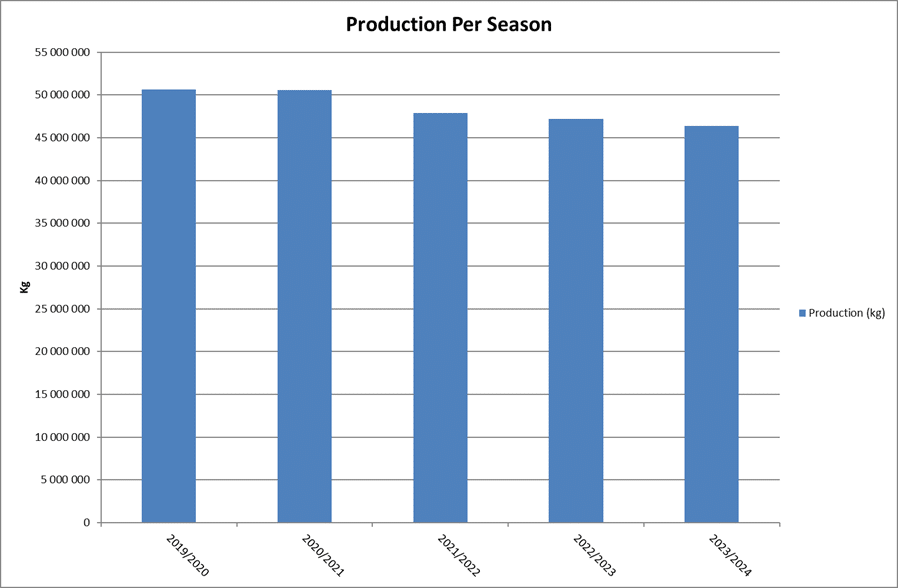
Over a five-year period, wool production remained relatively stable, ranging from a low of 44 million kg (2018/19) to a high of 50,6 million kg (2019/20), closing at 45,4 million kg in the current season.
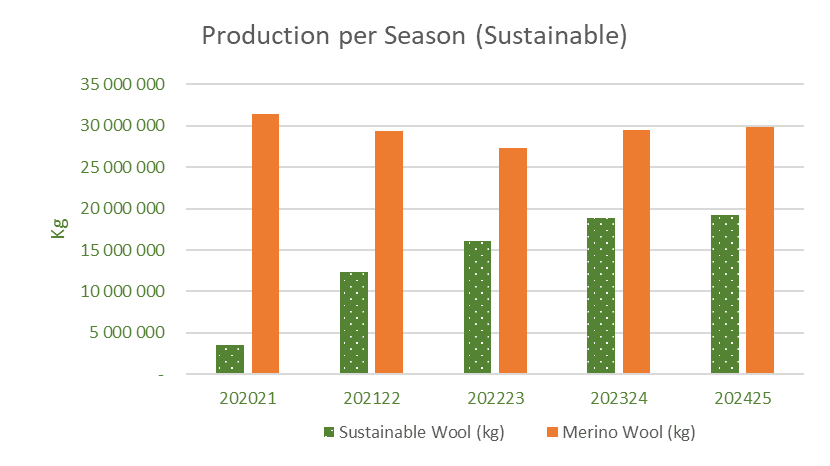
A positive development has been the continued growth of sustainable wool production, now accounting for 49% of total output. This reflects a strong industry-wide commitment to environmental and ethical production standards.
Quality indicators remained consistent, with an average micron of 19,6, a yield of 62,3%, and average vegetable matter (VM) content at 1,3% across all wool types. Merino wool maintained its premium status, comprising 68% of all wool offered.
In terms of market dynamics, 43,6 million kg of wool was offered, generating a total turnover of R3,96 billion. The average greasy price reached R104,97/kg for Merino and R63,82/kg for other white wools, with an overall average of R92,10/kg. While the season saw price growth during much of the year, there was a softening toward the final sales, with the all-wool indicator closing 2,1% up from the previous year’s closing value. However, the season average improved by 3,4%.
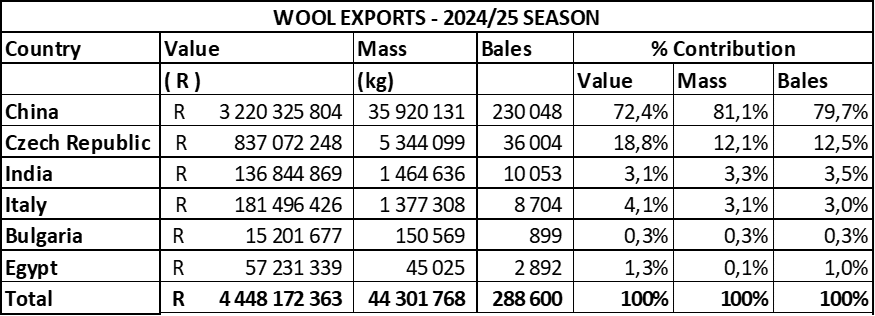
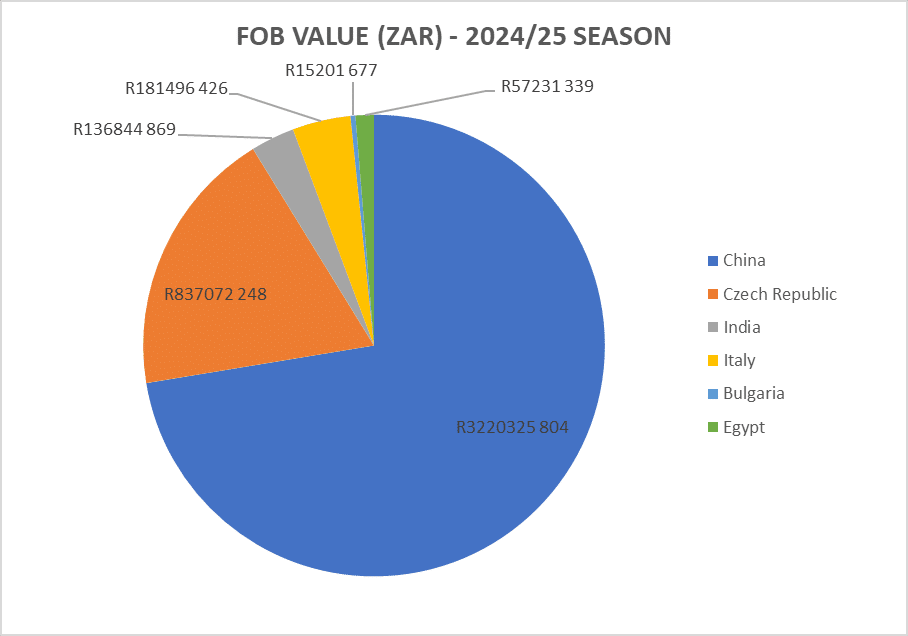
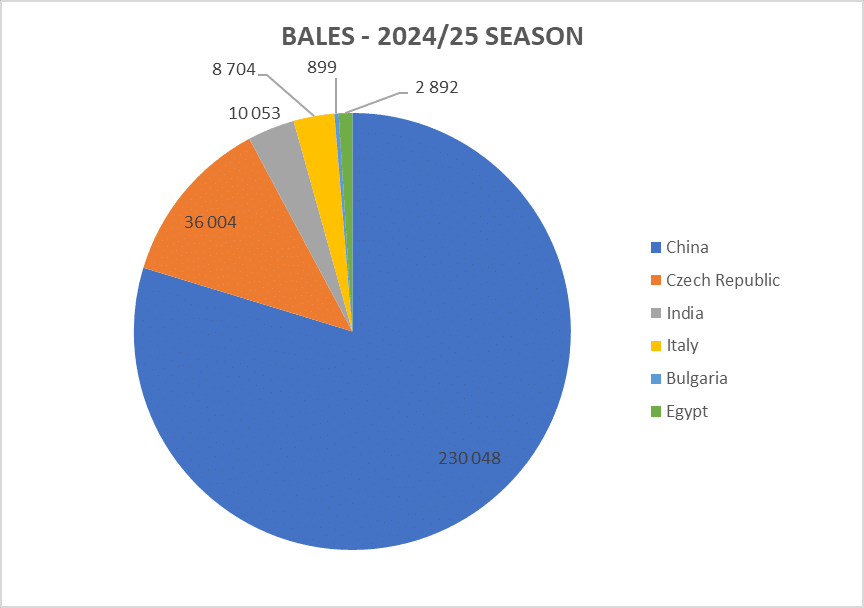
On the global front, South Africa exported 44,3 million kg of greasy wool valued at R4,44 billion Free on Board (FOB). China remained the primary export destination (81,1%), followed by the Czech Republic, India, and Italy. This season reflects both the resilience and adaptability of South Africa’s wool sector, especially in embracing sustainable practices while navigating challenging economic and environmental conditions.
Wool production
Regional analysis
Total receipts for 2024/25 declined by 1,9% compared to the 2023/24 season. Drought in certain regions and poor market performance led to wool producers withholding their wool clips from the market.
The Eastern Cape remains the top wool-producing province, delivering 33,5% of total receipts, followed by the Free State with 8,1m/kg (18%), and the Western Cape with 7,6m/kg (16,9%).
Five-year trend
Wool production varied from a low of 44m/kg greasy wool in the 2018/2019 season to a high of 50,6m/kg at the end of the 2019/2020 season and closing at 45,4m/kg in the 2024/2025 season.
Sustainable wool production
Wool produced under sustainable practices gradually increased over the past five seasons representing (49%) of the total South African production for the 2024/25 wool season. This increase is a direct result of a combined industry effort to follow sustainable wool production practices.
Average micron
The average micron for the season was: All wool (19,6), Merino wool (19,3), and other wool (20,5).

Average yield
The average yield for all wool was 62,3%, for Merino wool 64,9%, and other wool 56,6%.

Average VM
The average VM varied from 1,3% for all wool, to 1,2% for Merino wool, and 1,7% for other wool.

Wool market
Wool offering
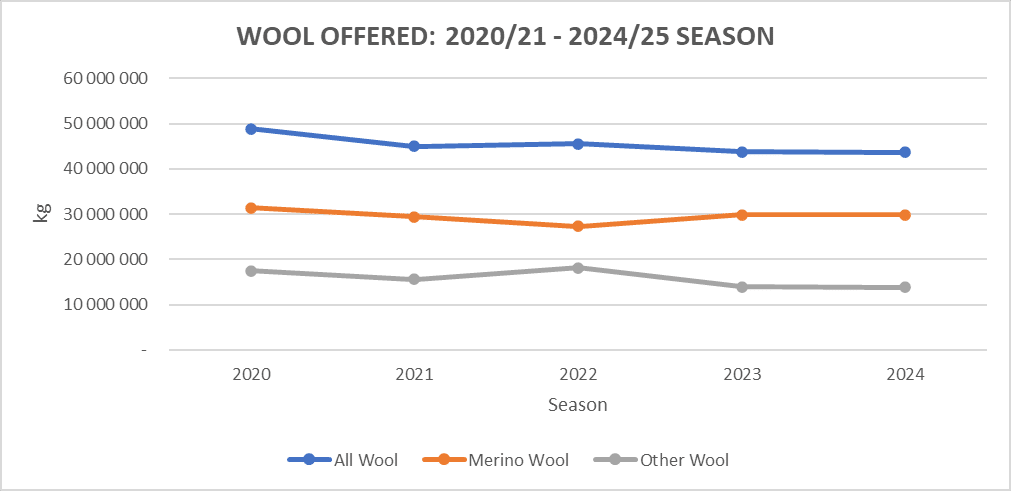
A total of 43,6m/kg wool was offered, with Merino wool’s share being 68%.
Sales turnover
Despite the lower wool price, the recorded gross value of sales for the season came to R3 959,61 million.

Average greasy price
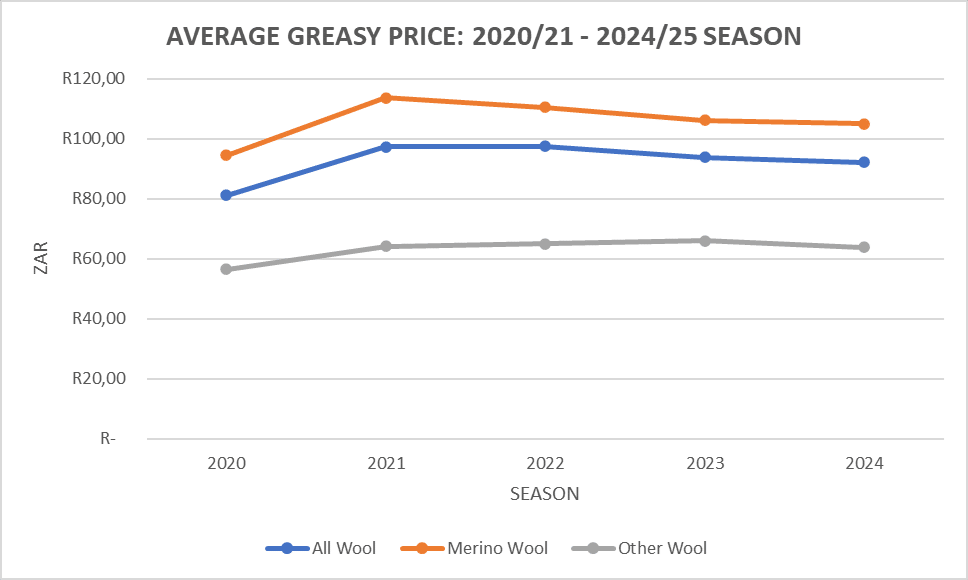
The average greasy price for Merino wool was R104,97/kg (greasy) and for other white wool R63,82/kg (greasy). The overall average price for all wool delivered was R92,10/kg (greasy).
Market trends
The 2024/25 wool season experienced a gradual increase in price throughout the season, with a decline towards the last few sales of the season. The all-wool indicator reached a season high of R189,65 p/kg (clean) and the certified wool indicator a high of R194,92 p/kg (clean). The certified indicator closed 2,1% higher than the closing sale of the previous season. The season average for the certified indicator was 2,4% higher compared to the 2023/24 season.
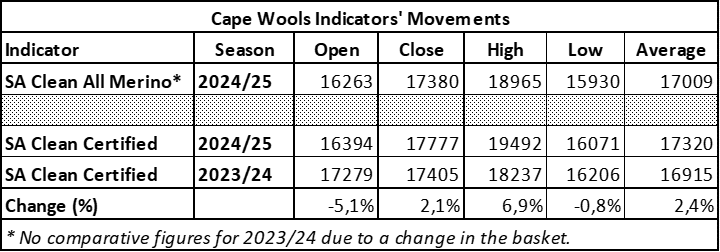

The South African and Australian indicators are compared in USD in the below graph.

Exports
An analysis of export data shows that South Africa is primarily a grease wool exporter, with 44 301 768 metric tonnes of grease wool shipped during the year at a total FOB value of R4 448,1 million. The major destination was China (81,1% of total) followed by the Czech Republic (12,1%), and India (3,3%). – Cape Wools SA