Estimated reading time: 3 minutes
In the April 2026 edition of Stockfarm, the focus shifts to practical ways producers can stay profitable in a financially strained livestock industry. We learn how to maximise carcass value, visit a family-run Eastern Cape farm that has successfully integrated dairy and beef operations for long-term sustainability, and examine the growing opportunity of turning invasive species into a valuable source of income. The issue also takes a closer look at bluetongue in sheep, making this edition a must-read for producers who want to protect their livestock.
Practical tips for profitable cattle farming
The livestock industry is currently under immense financial pressure. As a result, cattle producers must think strategically about improving their profitability to remain economically sustainable and continue farming in the long term. Richard Haupt, technical advisor at BBSG and a livestock consultant, shares eight practical tips for profitable cattle farming in the April issue of Stockfarm.
All about milk and meat
The hindquarter of a carcass yields the more sought-after and expensive cuts, while the forequarter has traditionally been used for minced and stew meat, regarded as cheaper portions. To maximise the total value of the carcass, it makes sense to focus on elevating the forequarter’s value. This is precisely the strategy adopted by Cavalier, a meat company based outside Cullinan in Gauteng. Izak Hofmeyr discusses the ins and outs with them in Stockfarm April.
A milking parlour and a beef cattle herd exclusively aimed at profitability, sustainability, and safekeeping for future generations – this requires some ingenuity. At Fenfield Farm near Hogsback in the Eastern Cape the owners were able to successfully integrate these two farming branches. Read Stockfarm April to find out how Mike Galloway and his daughter, Janice Renton, achieve this.
From encroacher to profitable charcoal
Namibia’s charcoal industry has developed into a large, highly organised sector. South Africa is also a major market for Namibian charcoal with as much as 70% of the charcoal consumed in South Africa coming from Namibia. This opens the door for utilising encroacher species such as the prosopis as a valuable source of income, generated both locally and the growing international market, to offset the cost of eradication. Dr Charlie Reinhardt takes an in-depth look at this in Stockfarm April.
Bluetongue in sheep
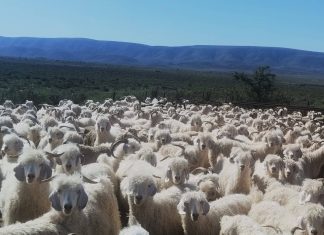
Bluetongue is a non-contagious viral disease affecting ruminants such as sheep, cattle, goats, and game. Carin Venter spoke with independent veterinary consultant Dr Tom Strydom about the vectors responsible for spreading the disease, signs and mortality rates, and the vaccination strategy he recommends for producers who want to protect their livestock.
Get your copy of Stockfarm April 2026 from selected retailers or at www.magzter.com. Also available as an interactive flipbook at https://digimags.agriorbit.com/books/Stockfarm-April-2026/. To subscribe, phone Beauty Mthombeni at 064 890 6941 or SMS ‘Subscribe’ and your phone number to 064 890 6941.