
Estimated reading time: 6 minutes
Behind every glass of beer lies a hidden engineering challenge. While brewing is widely celebrated as both a craft and a significant economic contributor, it remains one of the most water-intensive agro-processing industries. In South Africa, where water scarcity, aging municipal infrastructure, and persistent electricity shortages constrain industrial growth, brewery wastewater is no longer just an environmental liability. Instead, it represents a strategic resource with untapped potential. This shift in perspective from waste management to resource recovery forms the foundation of sustainable brewery engineering.

Source : https://www.mdpi.com/1634840
The scale of the challenge
Beer production requires significant volumes of water. Industry data indicates that for every litre of beer produced, between three and ten litres of wastewater are generated, with modern facilities typically achieving ratios of three to five litres. Considering the scale of commercial brewing operations, this translates into millions of cubic meters of wastewater annually.
If discharged without adequate treatment, this high-strength effluent can overwhelm municipal wastewater treatment works, increase operational costs, and negatively impact receiving water bodies. As a result, effective on-site treatment is not only an environmental responsibility but a regulatory necessity.
Understanding brewery wastewater
Brewery wastewater is characterised by a high organic load dominated by residual sugars, starch, yeast cells, and soluble solids. Chemical oxygen demand (COD) concentrations can range from several thousand to tens of thousands of milligrams per litre. Importantly, the wastewater is highly biodegradable, with typical biochemical oxygen demand (BOD) or COD ratios between 0,5 and 0,7, making it particularly suitable for biological treatment processes.
However, variability presents challenges. Cleaning-in-place (CIP) operations cause fluctuations in pH, while nutrients such as nitrogen and phosphorus are often present in significant concentrations. These characteristics demand carefully designed treatment systems, but they also create a valuable opportunity: the recovery of energy from organic matter.
Conventional treatment: Necessary but under-optimised
Industrial breweries typically operate on-site wastewater treatment plants consisting of primary and secondary treatment stages, with tertiary polishing implemented less frequently.
Primary treatment removes coarse solids, fats, oils, and grease through screening, grit removal, and equalisation. Secondary treatment, often aerobic activated sludge or biofilm systems, removes most biodegradable organic matter through controlled aeration and biomass growth, achieving substantial BOD reduction.
Where tertiary treatment is applied, advanced processes such as ultrafiltration, reverse osmosis, or advanced oxidation processes may be used to produce high-quality effluent suitable for non-potable reuse. However, many facilities stop at secondary treatment, focussing primarily on compliance rather than resource recovery.
Anaerobic digestion: From waste to biogas
Anaerobic digestion (AD) is a mature and globally proven technology capable of converting organic matter into methane-rich biogas. Under oxygen-free conditions, specialised micro-organisms break down organic compounds through hydrolysis, acidogenesis, acetogenesis, and methanogenesis, ultimately producing biogas and stabilised sludge. For breweries, this enables wastewater treatment to become an energy-generating process. The recovered biogas can be used for steam production, heating, or electricity generation. This reduces reliance on grid power and fossil fuels while lowering greenhouse gas emissions, which are key metrics in environmental, social, and governance (ESG) reporting.

Source : https://open.uct.ac.za/items/b9cf8e72-9380-4a6f-a3db-47656197ebb3
Technologies such as upflow anaerobic sludge blanket (UASB) and expanded granular sludge bed (EGSB) reactors are particularly well-suited for the treatment of high-strength industrial effluents. In South Africa, adoption remains limited but promising. Facilities such as the Heineken Sedibeng Brewery and the South African Breweries (SAB) Alrode Brewery have integrated anaerobic digestion into their wastewater treatment systems, enabling biogas recovery while maintaining regulatory compliance.
Beyond methane: The rise of green hydrogen
Global decarbonisation efforts and net-zero targets for 2050 are accelerating interest in alternative clean energy carriers, particularly green hydrogen. As industries transition from linear production models toward circular systems, wastewater is increasingly recognised as a feedstock for renewable hydrogen production.
Low-energy biological processes such as dark fermentation and microbial electrolysis cells (MECs) are gaining research attention for their ability to convert organic substrates, such as brewery wastewater, into hydrogen.
Dark fermentation produces hydrogen during the acidogenic breakdown of organic matter under anaerobic conditions. MECs, meanwhile, enhance hydrogen yields by applying a small external voltage to drive electro-biochemical reactions. While these technologies are still at various stages of development and commercial readiness, they represent the next frontier in integrated wastewater to energy systems.


In future brewery configurations, wastewater treatment plants could simultaneously remove pollutants, generate methane for immediate energy needs, and produce hydrogen as a strategic clean fuel, creating multi-product biorefineries embedded within industrial sites.
Research and innovation in South Africa
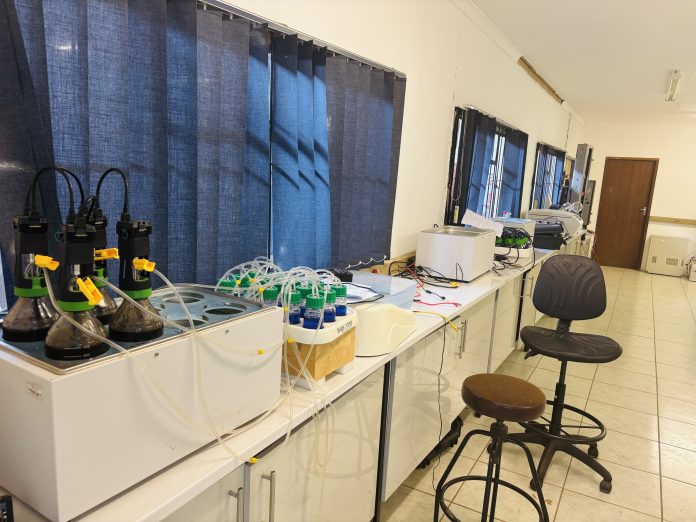
South Africa is not merely observing this transition but is actively contributing to it. The Agricultural Research Council (ARC) operates a sustainable energy and bioeconomy (SEBE) laboratory at its engineering campus in Silverton, Pretoria. The facility investigates renewable energy and value-added bioproducts from diverse biomass resources, including agro-industrial wastewater.
The laboratory explores multiple conversion pathway anaerobic digestion, dark fermentation, microbial electrolysis, photo-fermentation, gasification, and pyrolysis alongside renewable fuel production such as bioethanol and biodiesel. Importantly, the unit also supports postgraduate research and capacity development in this critical skills area.
Current research initiatives include:
- Assessment of resource‑recovery potential across agro‑industrial sectors through the development of dark‑fermentation biorefinery concepts (Water Research Commission‑funded project).
- Integration of heterogeneous catalysts in anaerobic digestion for enhanced biogas yields from sugar-industry waste.
- Design and simulation of integrated dark-fermentation biorefineries using beverage wastewater.
- Investigation of biohydrogen production from wastewater via microbial electrolysis cells.
Such work demonstrates that wastewater valorisation is not theoretical. It is being engineered, tested, and refined within South African laboratories. – Sihle Thuesi, Chemical Engineering graduate and water‑to‑energy research enthusiast; and Primrose Magama and Zikhona Buyeye, ARC-Natural Resources and Engineering
For inquiries, send an email to Primrose Magama at MagamaP@arc.agric.za
