
Estimated reading time: 6 minutes
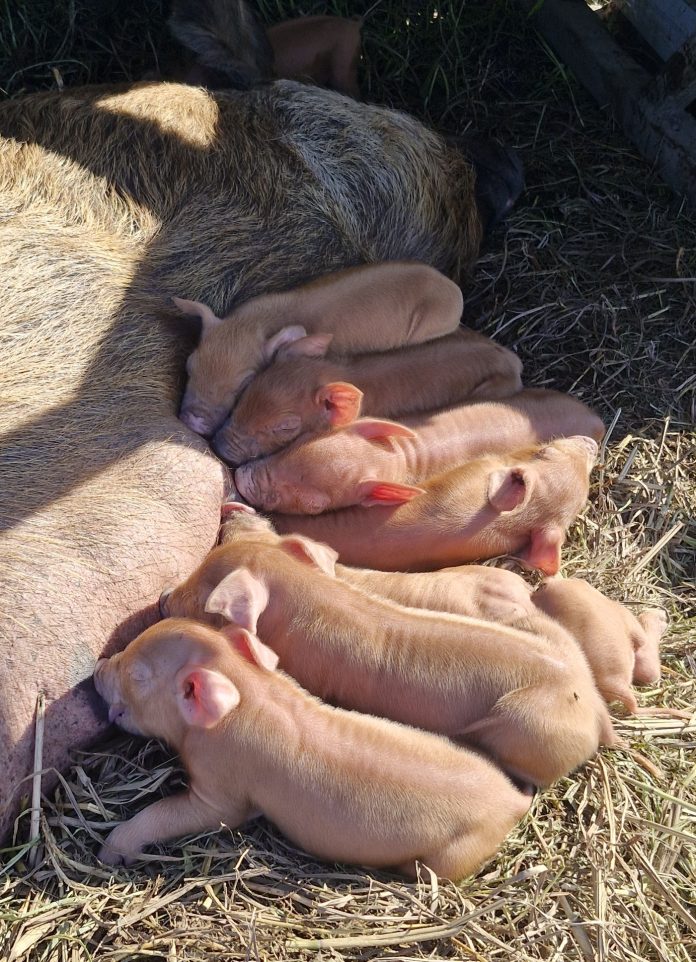
Simon Goble knew from an early age that he wanted to do something meaningful with his life. Little did this city boy know that, at 36, he would be a producer and advocate of responsible stewardship and animal welfare, farming free-range pigs at Khula Farms at the foothills of the Langeberg near Swellendam.
His interest in agriculture was sparked when studying aquaculture for a year, after which he completed a BAgric degree at Elsenburg Agricultural College. He gained valuable practical experience on a grain and sheep farm near Swellendam and further broadened his knowledge while working on commercial farms in the United States. It was during this time that he realised he wanted to farm in a way that worked with nature rather than against it.

A gradual process
When the Covid-19 pandemic created an unexpected opportunity, Simon leased 1ha of land from RegenAg SA founder Andrew Ardington. After weighing the options, they concluded that a Duroc pig enterprise would make best use of the land.
“It all started with a modest 1ha of leased land and ten weaners,” Simon recalls during Stockarm’s visit. Around him, dozens of pigs are rooting through the soil with their snouts, grazing lush mixed grazing, and basking in the sun – a scene few people would associate with modern pork production.
“Not long after securing the first ten weaners, I added another ten, followed by a boar with outstanding genetics from Heidelberg. He made a tremendous contribution to building the herd and became the foundation of my breeding programme.”

Farming with the environment
The business has grown steadily since then. Today, Simon runs around 150 pigs, including breeding sows, growers and weaners, with numbers fluctuating according to breeding cycles and market demand. They slaughter between 15 and 25 pigs, depending on the month.
Although grazing is an integral cog in the system, Simon emphasises that it is only one part of the pigs’ nutritional requirements. “I knew from the start that commercial feed alone wasn’t the answer. While grazing makes an important contribution to the diet, it doesn’t supply enough protein and energy. I was constantly looking for ways to use locally available resources without compromising the animals’ nutritional needs.”
Surplus seasonal fruit from nearby orchards is an important part of the ration and is supplemented with dairy by-products. Whey supplies valuable nutrients and the pigs thrive on it.
“Unfortunately, we had to rethink our feeding strategy when the Lancewood smallholder collection point closed,” he explains. The pigs’ primary ration now consists of wheat and barley, which are cooked for about two hours before feeding to improve digestibility. Whenever possible, this is supplemented with fresh grazing and seasonal produce.
Healthy soil, healthy pigs
The pigs may be the heart of the enterprise, but Simon’s greatest passion is the soil beneath their feet. “True success isn’t measured only by the amount of meat a farm produces, but by the health of the soil that makes that production possible.
“We regularly move the pigs between small camps enclosed with temporary electric fencing. Once a camp has been sufficiently grazed, it is rested to allow the grazing to recover before the animals return. This rotational grazing system mimics the natural movement of wild animals and gives plants time to regenerate.”
After heavy rain, pigs can quickly turn a camp into a muddy area. “We try to move them before that happens, but it isn’t always possible. Even so, over the past six years I’ve seen remarkable improvements in the soil. As the pigs graze, trampling the vegetation and returning organic matter to the ground, soil life steadily improves. There were virtually no earthworms when we started here. Now they’re everywhere, which is one of the clearest signs that the soil is recovering.”

A labour-intensive enterprise
The grazing consists mainly of kikuyu, clover and various volunteer species, such as grains. While many producers regard weeds as a nuisance, Simon believes many of these plants contribute positively to biodiversity and soil health.
Pigs roaming freely across green grazing may appear idyllic, but it also means hard work. Mature pigs are fed twice a day and weaners three times a day. Electric fences must be inspected regularly, especially after winter storms and strong winds. “Pigs quickly learn when a fence isn’t working.” Managing pigs outdoors also requires practical solutions. Instead of relying on large wallows, the farm uses above-ground sprinkler systems to help keep the pigs cool during hot summer days.
Building consumer confidence
“One advantage of our pork is that people who react to conventionally produced pork find they can eat ours without any problems. Producing quality pork is only half the challenge; finding customers who value it is the other half,” says Simon. “Cash flow was one of the biggest obstacles in the early years. I literally lived from one pig to the next, selling one animal to finance the next.”
The pigs are slaughtered at Roelcor’s facilities in Malmesbury and George. “They do an excellent job of handling the pigs before slaughter. They also clean the intestines thoroughly and prepare them neatly.” Simon has built a loyal customer base at the weekly Under the Oaks market in Swellendam, where he sells a range of products such as salami, salami sticks, coppa (Italian cured meat), Landjäger, cabanossi, and chorizo. “Pork chops, bacon and sausages are processed by specialists, and I distribute them. Value-adding is where smaller producers can create real opportunities, and I’d like to do even more of that in the future.”
Staying focussed
Simon believes intensive commercial pig farming has an essential role to play in feeding a growing global population. At the same time, he believes there is ample room for smaller producers who offer regenerative alternatives. His farming philosophy is based on a few core principles: The pigs spend their entire lives outdoors and are not treated with vaccines, antibiotics, or dewormers. He also places great emphasis on minimising stress throughout their lives.
Although the farm has grown considerably since those first ten weaners arrived in 2020, there is still much to achieve. “I want to continue refining the breeding programme, develop more value-added products, and further improve both herd health and soil health.”
He hopes his journey will inspire other young people. “I’d rather share what I’ve learned for free than have people believe pigs belong in pens for their entire lives. If you’re prepared to work hard, start small and stay focussed, it can be an incredibly rewarding way to farm.” – Carin Venter, Stockfarm
For more information, contact Simon Goble on 072 244 0745 or simongoble89@gmail.com
Read more: Domestic pork industry carcass price statistics – Week 35 of 2026
