

Estimated reading time: 4 minutes
South Africa’s livestock industry is putting its technology where its mouth is by integrating livestock management with Red Meat Industry Services (RMIS)’s Traceability Platform. In fact, eight livestock management programmes are already able to link into the RMIS platform, and at least three more are in the process of linking.
This was made official last week in Pretoria during the launch of the second phase of RMIS’s traceability strategy. The event was attended by the minister of agriculture, John Steenhuisen, industry leaders from every part of the value chain, and various representatives from organised agriculture.

“This integration marks a turning point for the South African red meat industry,” said RMIS CEO, Dewald Olivier. He added that this step would bridge the data gap, improving disease response and enabling producers at every level to participate in a traceable value chain. Olivier stressed that this step was only made possible through the close cooperation between the Red Meat and Livestock Primary Cluster (RMPC), consisting of the Red Meat Producers’ Organisation (RPO), Red Meat Abattoir Association (RMAA), South African Feedlot Association (Safa), and the National Emerging Red Meat Producers’ Organisation (Nerpo). “If these four organisations did not have the vision to sit around a table and find a way to cooperate for the betterment of the entire value chain, then we would not be here today,” Olivier said during the launch, thanking the industry for its support in turning a traceability vision into action.
Integration across the value chain
The first phase of the RMIS’s traceability strategy was for producers to register their farms’ Global Location Number (GLN) on the international GLS 1-system.
Phase 2 now introduces API integration between the RMIS Traceability Platform and a suite of existing digital livestock management systems, allowing for secure and standardised data sharing without duplicate data capture.
The systems now connected include:
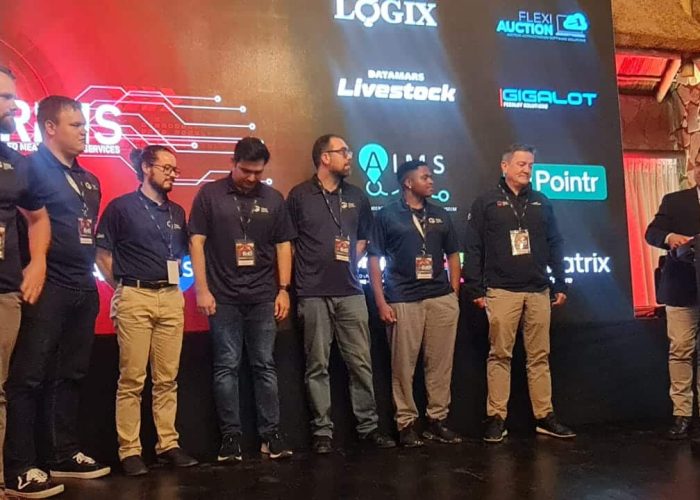
- Farm level: Benguelasoft, Logix, AIMS, and Datamars.
- Auction: FlexiAuction.
- Feedlot: Gigalot and Pointr Software.
- Abattoir: Matrix Software.
For the first time, producers can authorise their animal movement data to flow seamlessly through these platforms — creating a single traceability framework from farm to fork.
Dr Phillip Oosthuizen, chief operational officer of RMIS, said this decision was deliberate to give role-players the option of using the management option that works best for their unique situation. It also enables them to share only relevant information with the traceability platform. “It’s critical to build trust, and when people are deprived of making their own decisions and are forced into a single system, then trust is not built – it’s destroyed.”
A full list of integrated systems is available at rmis.co.za/services/traceability and will be updated as new integrations go live.
Tackling longstanding industry challenges
The enhanced system directly addresses several critical issues in the red meat industry:
- Abattoir traceability: Carcasses can now be traced back to their farms of origin.
- Export compliance: Enhanced data integrity strengthens South Africa’s position in export markets.
- Faster disease response: Improved movement tracking enables rapid containment and biosecurity action during outbreaks.
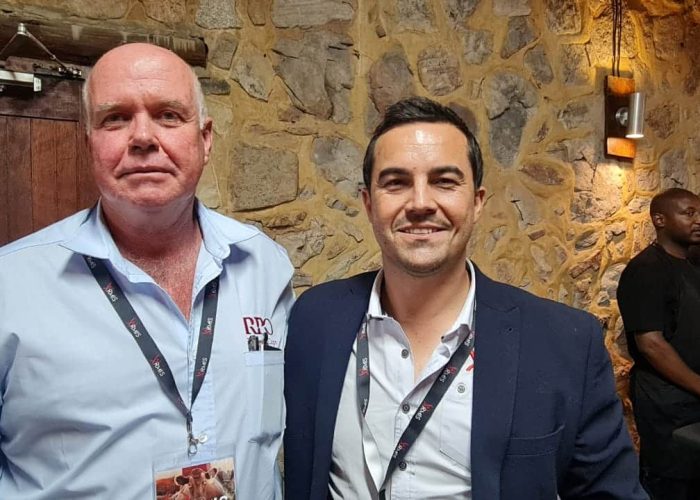 Brent McNamara, CEO of RPO Eastern Cape, and Dr Phillip Oosthuizen, COO of RMIS.
Built-in biosecurity tools
Responding to recent foot-and-mouth disease (FMD) outbreaks, RMIS has incorporated new disease-monitoring tools, including:
- A public FMD case map showing confirmed outbreak zones (rmis.co.za/disease-incidents).
- Automatic WhatsApp alerts for registered users within a 10km radius of reported cases.
These features aim to strengthen on-the-ground disease surveillance and improve coordination during movement restrictions.
New app loading
To ensure smaller and emerging producers are not left behind, RMIS also plans to unveil the RMIS Movement App in December – a free, easy-to-use mobile tool for recording animal movements using Global Location Numbers (GLNs).
Dr Oosthuizen said the application will focus solely on movement data and not on production information, making it simple for any registered production unit to participate in traceability efforts. It will be available on Google Play and iOS App Store by the end of the year. – Susan Marais, Plaas Media
