
Estimated reading time: 6 minutes
Seeds are not just agricultural inputs; they embody our future, the promise of a resilient Africa in the face of challenges, thus contributing to our food sovereignty.
Amadour Sarr, president of Afsta
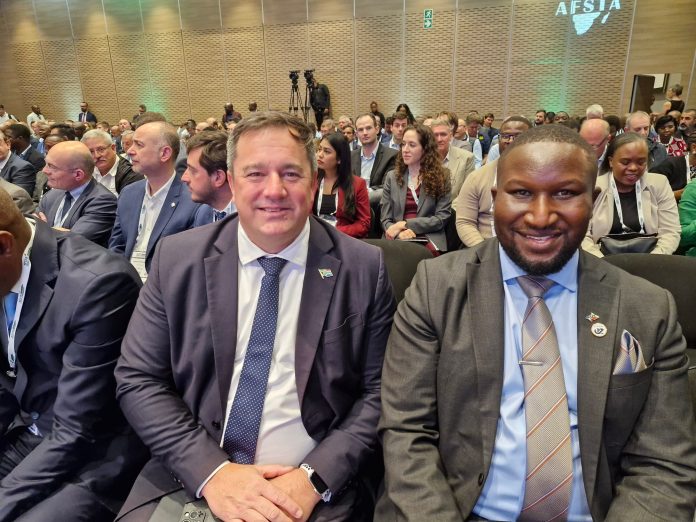
The African Seed Trade Association (Afsta) is a non-profit membership association that champions the interests of private seed companies in Africa. This year’s congress with the theme “Empowering Africa’s future, one seed at a time”, took place at the Century City Conference Centre from 23 to 25 March. This theme reflects a shared commitment to strengthening Africa’s agricultural transformation through innovative seed technologies, strategic partnerships, and sustainable growth.
This prestigious event welcomed over 500 delegates from across the African continent and beyond, and consisted of engaging conversations and valuable outcomes paving the way forward.

The opening ceremony was led by South Africa’s minister of agriculture, John Steenhuisen, who said it was inspiring to see 500 delegates from diverse countries and cultures gathered under one roof, united by agriculture. He stressed that Africa must keep up its momentum to remain relevant, adding that strong partnerships and collaboration are key to unlocking future opportunities.
Matome Ramokgopa, chairperson of the National Seed Organisation of South Africa (Sansor), said at the inaugural ceremony that Africa needs improved genetics to help secure food security. “Seed has the power to carry nations,” he said.
Harmonising protocols
The African seed industry is undergoing rapid transformation and experiencing tremendous pressure according to Afsta secretary general, Dr Yacouba Diallo, who provided an overview of the Afsta secretariat, its various committees, and its growing membership across the African continent.
During the opening ceremony he said the future of Afsta relies on several platforms and that the association is prepared to lead with its partners and all of those on board. He added that changing seed market dynamics and farmers preferences also play a major role, putting pressure on the various trade associations to adapt their business models and operation strategies.

Seed innovation is no longer optional
The session focussed on key trends for seed-related innovation which is paramount to building resilient, climate-smart, and market-driven agricultural systems across Africa.
Dr Driekie Fourie, a product biologist at Syngenta and lecturer at North-West University, discussed next-generation seed treatment where science and nature meet.
“For every seed that fails to germinate, we lose income,” she explained. “It is important for us to realise that the first seed treatments were based only on chemistry. This has changed because of our changing agricultural landscape. These days we focus on an integrated approach which harnesses both chemistry and wishful thinking regarding biologicals.” She stressed the need to support producers, especially small-scale farmers in Africa, who often plant seeds that have no protection.

These new treatment technologies not only protect seeds but also activate their full potential, improving quality and yield. Ultimately, this contributes directly to enhanced food security.
Phytosanitary issues in South Africa

Jan Hendrik Venter, director of Plant Health at the South African National Department of Agriculture, explained that integrated phytosanitary measures in seed trade are essential for improving regulatory transparency and ensuring accurate information as seed moves between countries – often through multiple production systems before reaching the end user.
“To enable a safe seed trade we need to ensure that proper phytosanitary measures are in place, while making sure we aren’t over-regulating in such a way that it is impossible to trade seed,” he said. “The International Plant Protection Convention has established multiple phytosanitary standards which will complement the movement of seed, one being the International Standards for Phytosanitary Measures (ISPM) 38, which deals with the international movement of seed.”
Seed development and trade also involves a good certification system, such as South Africa’s ePhyto system which helps traders by preventing delays at ports of entry, making sure that phytosanitary measures and consignments are verified to eliminate fraud and ensure the quality and safety of seed. South Africa has invested significantly in advanced plant/pest surveillance systems and improved digital monitoring, while also strengthening co-operation with international organisations through the African phytosanitary programme. This includes the ePhyto system, an electronic permit platform that enhances transparency regarding import requirements.
“Importantly, we are now collaborating with the National Biosecurity Hub, an essential step in developing diagnostic networking processes and improving surveillance systems. It is a platform where information is captured to help ensure that pest expertise is at hand, and that we are able to document and record pest occurrences across the country, including pests from other countries that pose a threat to South Africa.”
During the phytosanitary session, David Malan, managing director at Klein Karoo Seed Production, shared some of his experiences in mitigating the risks associated with diseases and pests. His presentation focussed on disease and pest management during seed production, and practical ways to keep seed disease-free during production, such as the removal of unwanted bacteria and minimising certain seed health risks.


Many new business opportunities and partnerships emerged in the business halls where delegates met with industry leaders, showcased their innovations, and concluded direct trade deals to help expand their reach across Africa.
At the close of the congress, Kobus van Huyssteen, Sansor’s technical manager, thanked all attendees, especially the South African delegates, for contributing to a well-organised event. He also expressed appreciation to Afsta and the sponsors for their support, adding that continued trade and strong relationships across Africa remain essential.
Sansor represents the South African seed industry, while Afsta advocates for private seed companies throughout the continent. – Carin Venter, Plaas Media
For more information, contact Afsta on tel 020 242 90017, or send an email to afsta@afsta.org
