
Wildlife Ranching South Africa (WRSA) welcomes the publication of South Africa’s 2026 and 2027 hunting and export quotas for African elephant (loxodonta africana), black rhinoceros (diceros bicornis bicornis, diceros minor and diceros michaeli) and leopard (panthera pardus) by the minister of forestry, fisheries and the environment, David Maynier, in the Government Gazette. The setting of the quotas follows a significant legal victory with costs for WRSA.
WRSA was forced to resort to legal action following prolonged delays in the determination and publication of hunting and export quotas for the three species. The absence of formalised quotas left wildlife ranchers, communities, professional hunters and other participants in the wildlife economy without the regulatory certainty required to plan and conduct their businesses.
The review application seeking to challenge the failure to set annual hunting quotas was subsequently settled by agreement between WRSA, the Minister and his department. In terms of the settlement, the Minister undertook to take all necessary steps to determine national annual quotas for African elephant, black rhinoceros and leopard for both the 2026 and 2027 calendar years, as well as to allocate the relevant annual quotas to provinces in accordance with the CITES Regulations. This signifies an important victory for the industry and the return to regular annual hunting quotas for years to come.
Crucially, the settlement imposed clear deadlines: the 2026 quotas were to be determined by no later than 30 August 2026, while the 2027 quotas must be determined by no later than 31 December 2026. The Minister also agreed to pay WRSA’s unopposed legal costs, including the costs of one counsel. The agreement became binding upon signature, with the parties consenting to it being made an order of the High Court.
The publication of the quotas on 31 August represents an important and fruitful outcome of WRSA’s decision to pursue legal action – not only for WRSA and its members, but for the broader wildlife industry and the principle that South Africa’s wildlife economy must be governed through lawful, predictable and accountable administrative processes.
“WRSA did not take legal action for the sake of confrontation. We did so because regulatory certainty matters,” says WRSA CEO Richard York. “Our members operate legitimate businesses, employ people, invest in wildlife and habitat, and contribute to conservation. They cannot be expected to operate indefinitely while essential regulatory decisions remain outstanding.”
Long absence of quotas
The last time the Department of Forestry, Fisheries and the Environment published hunting quotas for these three species was in February 2022, four years ago, under then Minister Barbara Creecy.
Richard York, CEO of WRSA, says the publication brings much-needed certainty to the wildlife industry. “WRSA welcomes the regulatory certainty provided by the publication and looks forward to constructive engagement with government to ensure that future quota-setting processes are concluded timeously, transparently and on the basis of sound science.”
Quota numbers
The Gazette establishes an annual African elephant export quota of 300 tusks from no more than 150 individual elephants in both 2026 and 2027.
For black rhinoceros, the annual quota provides for 11 adult male hunting trophies across the three listed subspecies in each year: two southern black rhinoceros, eight south-central black rhinoceros and one eastern black rhinoceros.
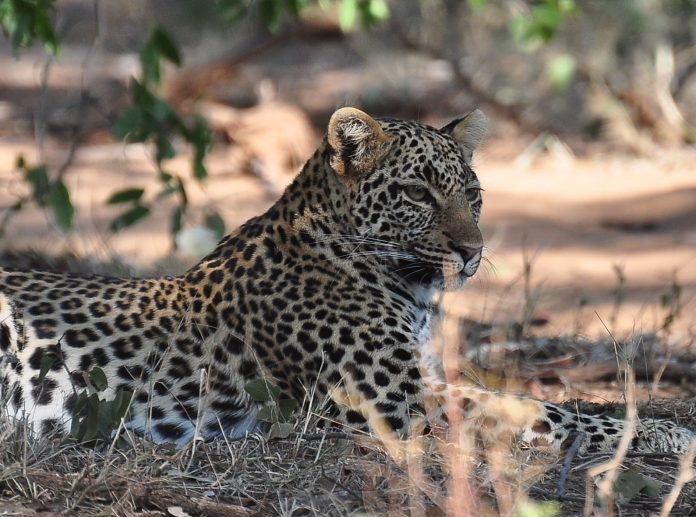
For leopard, 11 adult male hunting trophies have been allocated for 2026 and 10 for 2027, with animals required to be seven years or older.
The leopard quota is allocated provincially as follows:
For 2026:
- KwaZulu-Natal – 1
- Limpopo – 5
- Mpumalanga – 2
- North West – 3
For 2027:
- KwaZulu-Natal – 0
- Limpopo – 5
- Mpumalanga – 2
- North West – 3
Only one qualifying male leopard (7 years of age or older) may be exported from each eligible hunting zone, subject to the national leopard monitoring framework and applicable provincial processes. This is due to the fact that leopards of this age are not considered to contribute to conservation or population growth.
Support list
Thank you to WRSA’s Sustainable Use Coalition of Southern Africa (SUCo-SA) partners, who supported this action, specifically:
- Confederation of Hunting Associations of South Africa (CHASA),
- National Hunting and Shooting Association (Natshoot),
- The True Green Alliance (TGA),
- South African Taxidermy and Tannery Association (SATTA),
- South African Predator Association (SAPA)
- Parrot Breeders of South Africa (PVSA/PASA).
WRSA would also like to acknowledge the support from other local and international associations:
- Community Association for South Africans in Natural Resources (CASA),
- World Conservation Trust (IWMC),
- Conservation Force,
- Safari Club International (SCI),
- Limpopo Hunters Liaison Forum (LHLF),
- Southern African Agri Initiative (SAAI),
- SA Hunters and Game Conservation Association (SAHGCA),
- TLU SA and
- Agri Eastern Cape.
Join WRSA today
“This outcome demonstrates the importance of organised industry representation. Where necessary, WRSA will take the steps required to protect the legitimate interests of its members and ensure that the wildlife economy is able to operate within a clear and functional regulatory environment,” says York.
Wildlife ranchers who want a strong, credible voice representing their interests are encouraged to join WRSA.
Through collective action, industry representation and constructive engagement with government, WRSA works to protect and advance the interests of wildlife ranchers and the broader wildlife economy.
This case demonstrates what strong industry representation can achieve. Every additional member strengthens WRSA’s mandate and its ability to advocate for regulatory certainty and a sustainable, scientifically grounded and economically viable future for South Africa’s wildlife industry. – Press release, WRSA
Interested parties can contact Ankie Stroebel on 082 441 1822 or members@wrsa.co.za, or visit www.wrsa.co.za.
