Estimated reading time: 5 minutes
There is growing optimism among key stakeholders regarding the progress being made to improve rural infrastructure in South Africa. Improvements in rail, road networks, water systems, and the reliable supply of energy are at the forefront of these developments. However, private sector investment remains crucial to accelerate and sustain this progress.
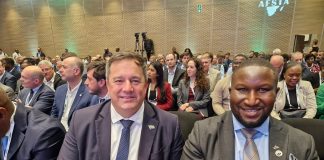
This was emphasised during the opening session of the Nation in Conversation series at Nampo 2025. The panel discussion focused on strengthening rural infrastructure to enhance agricultural productivity.
Shifting freight movement from road to rail
Moshe Motlohi, chief executive of railway infrastructure at Transnet, highlighted several challenges and opportunities during the panel discussion facilitated by journalist and television presenter, Lourensa Eckard. Motlohi explained that years of underinvestment in rail infrastructure has significantly weakened the sector, resulting in freight shifting from rail to road. However, government has acknowledged the need for policy reform which led to the opening of the rail network to private operators, creating opportunities for increased investment and participation from the private sector.
As a result of these policy shifts, Transnet issued its first-ever Network Statement in December last year, effectively opening up the national railway network for private sector access—a historic move. He said the response was overwhelmingly positive, prompting an extension of the application deadline to the end of February this year. In total, 98 applications were received from interested parties.
Motlohi said Transnet currently operates approximately 22 000km of railway lines across South Africa. This network is divided into two categories:
- A-network: Comprising the first 12 000km, this network includes primary freight routes transporting coal, iron ore, manganese, and containers. It remains fully operational and is the main focus of Transnet’s limited funding.
- B-network: This includes the branch lines, many of which serve the agricultural sector and rural industries, connecting farms to the main lines.
He explained that due to financial constraints, Transnet is prioritising investment in the A-network. Nonetheless, Motlohi stressed that restoring and maintaining both networks require collaborative efforts. Working closely with industry partners, Transnet has conducted infrastructure assessments to determine which upgrades are necessary and financially viable . He emphasised the urgent need for diversified funding sources and attractive investment models to draw in private sector capital, skills, innovation, and energy.
Looking ahead, Transnet aims to increase cargo volumes moved by rail to 250 million tons by 2030. For the current financial year, the target is 180 million tons. Motlohi said if no additional investment is secured, Transnet projects reaching 227 million tons by 2030 but with active third-party involvement, they can meet their 250-million-ton goal.
Collaboration among key role-players
Theo Boshoff, CEO of the Agricultural Business Chamber (Agbiz), emphasised that logistics infrastructure is critically important but that equal attention must be given to bulk water systems, municipal infrastructure, and on-farm infrastructure. He welcomed the conscious shift towards enabling third-party access, increasing competition, and encouraging private investment—particularly the effort to move freight from road back to rail. He said this transition is necessary.
In the 1980s, South Africa transported around 80% of its grain by rail. Today, that figure has dropped to below 8%. Boshoff acknowledged that although the shift won’t happen overnight, positive steps are being taken. Foundational work is underway to rebuild the systems needed to restore the country’s logistics capabilities. He pointed out that meaningful collaboration is beginning to take shape between government, industry stakeholders, and the private sector—particularly in port development and rail access reform. However, he warned that while progress is evident, rebuilding the necessary infrastructure and systems will require time and sustained commitment from all involved.
Public participation
Marlize Nel-Verwey, provincial manager of SANRAL’s Free State office, stressed the importance of public participation in infrastructure planning. Whether as individuals or through organised bodies such as business chambers or farming community representatives, stakeholders must actively engage in integrated development plans (IDPs) at the local, district, and provincial levels.
She said SANRAL works for the road user—not the other way around. However, funding remains a persistent challenge across all levels of government. “There is always more work to be done and more projects to roll out than there is funding available. This is why planning is crucial, and public input plays a significant role in shaping that planning.” Public participation helps SANRAL align its infrastructure priorities with real community needs, ensuring that limited resources are directed where they are most needed.
ISA’s role in national infrastructure delivery
Dr Hubert Joynt, programme manager at the Centre of Excellence at Infrastructure South Africa (ISA), highlighted the government’s renewed focus on infrastructure development. He explained that ISA was established following a cabinet decision to create a central body that would oversee and co-ordinate infrastructure projects across all sectors. ISA serves as the single point of entry for major infrastructure projects and its mandate includes managing strategic integrated projects (SIPs) and addressing regulatory obstacles that delay delivery.
To date, ISA has received around 600 regulatory unblocking requests, many of which have already been resolved. ISA also plays a critical role infast-tracking project implementationand defining atargeted national infrastructure portfolio. The goal is to prioritise projects that will drive inclusive economic growth, improve service delivery, and build a resilient infrastructure base for the future. – Christal-Lize Muller, Plaas Media