

Estimated reading time: 6 minutes
“A little less conversation … a little more action.” These Elvis Presley lyrics represent a good summary of the reaction of most livestock leaders on the minister of agriculture’s announcement regarding the strategy the department will follow to win the war against foot and mouth disease (FMD).
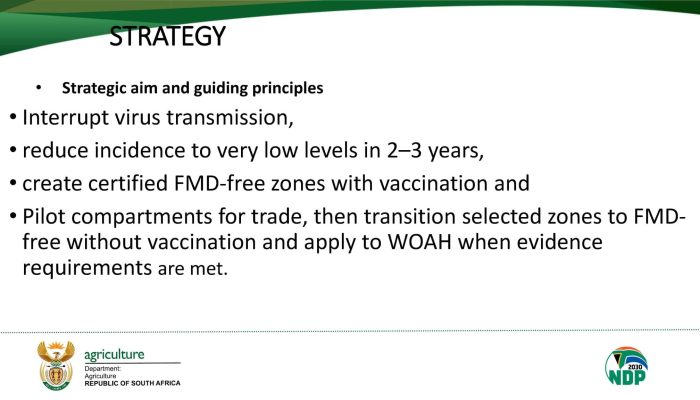
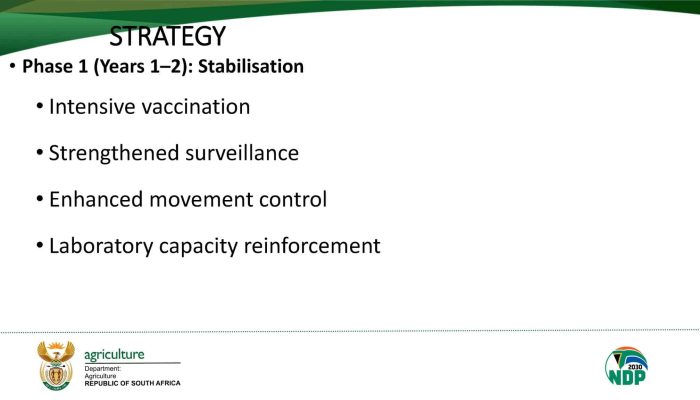
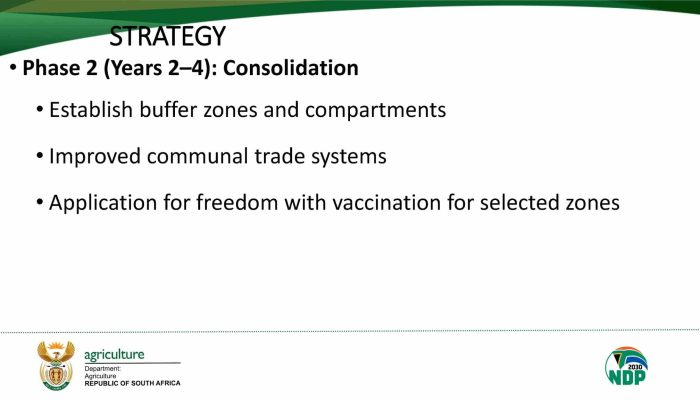
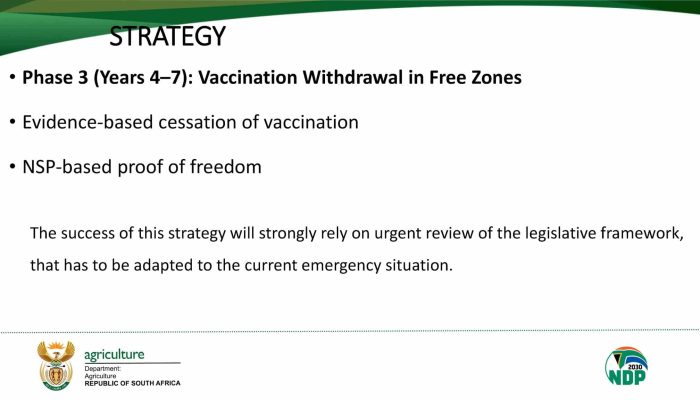
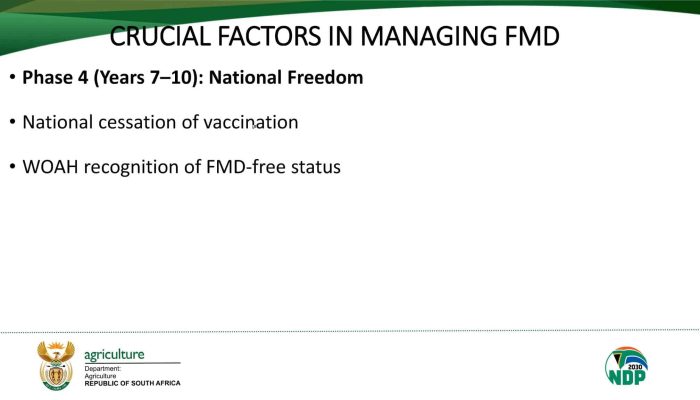
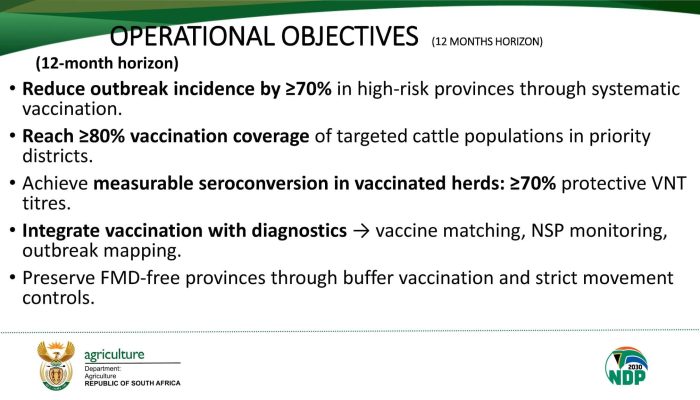
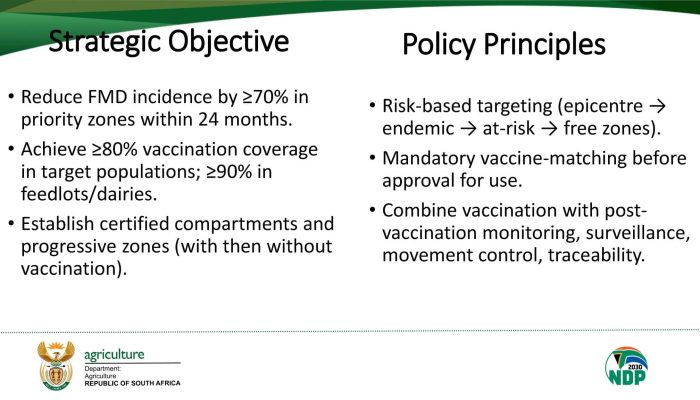
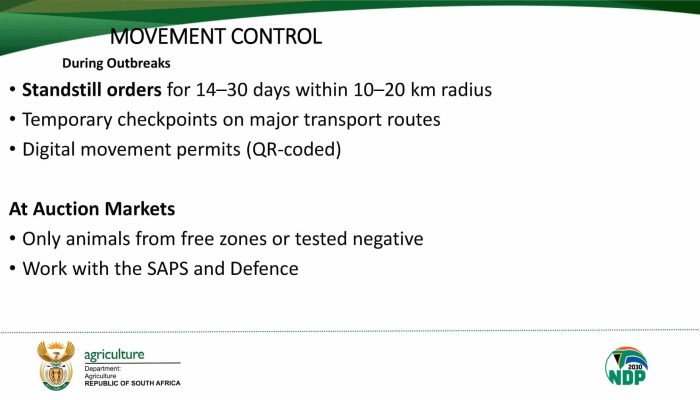
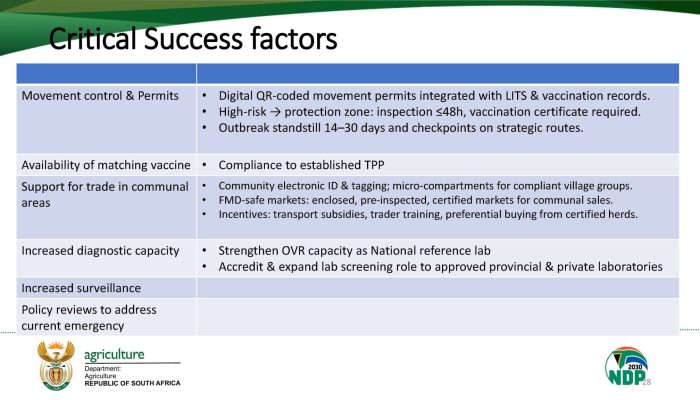
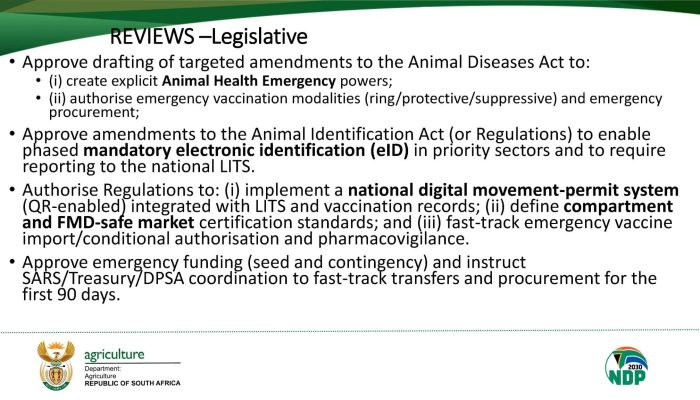
On Wednesday, agriculture minister John Steenhuisen held a press conference which focussed on the government’s strategy to win the war against FMD over the next decade. This long-term strategy, which will be rolled out in phases, primarily rests on the shoulders of vaccination and movement control.
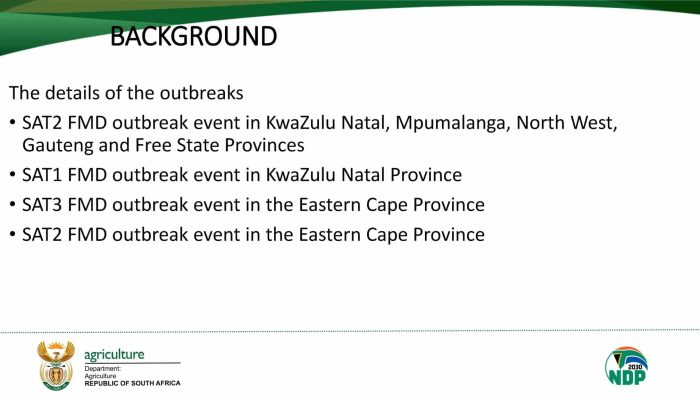
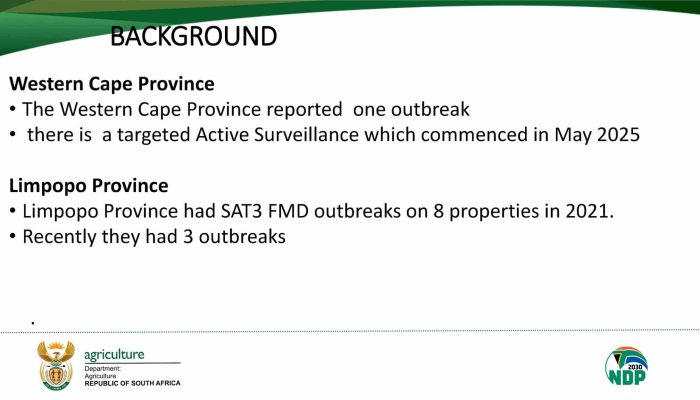
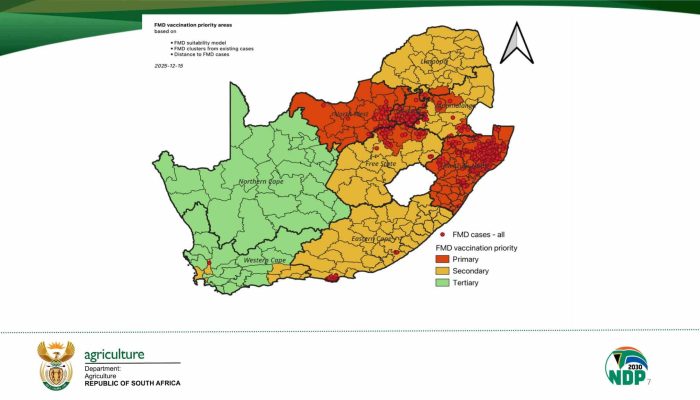
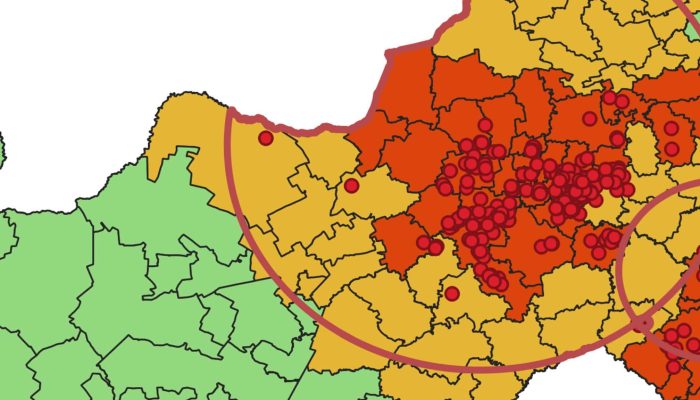
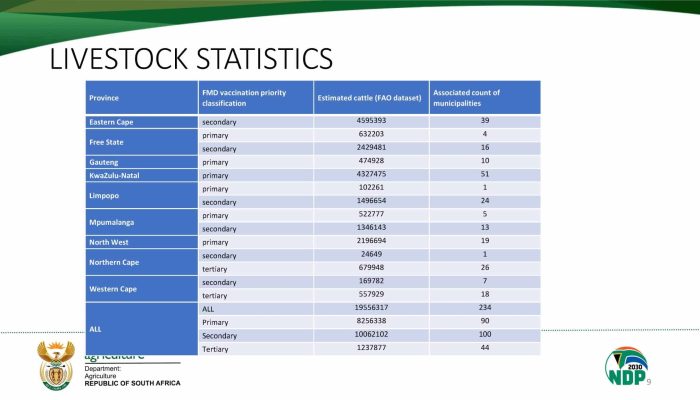
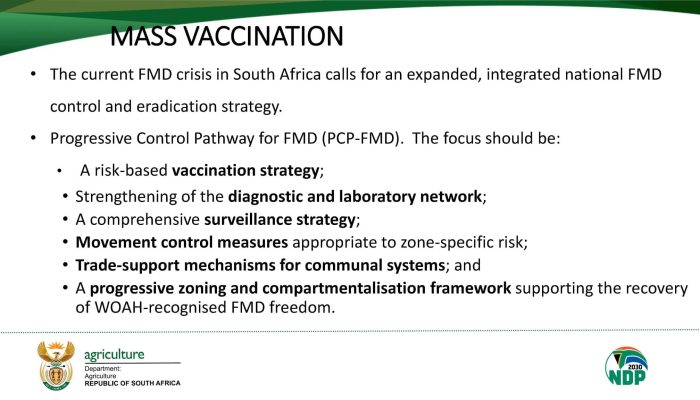
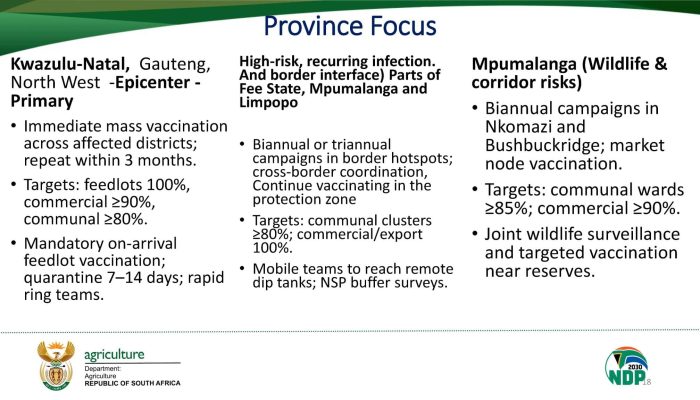
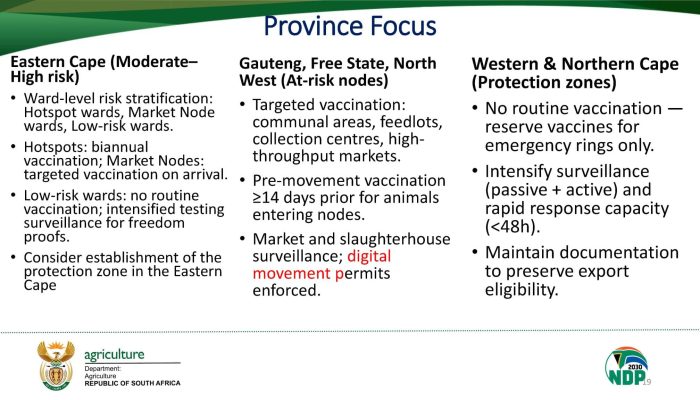
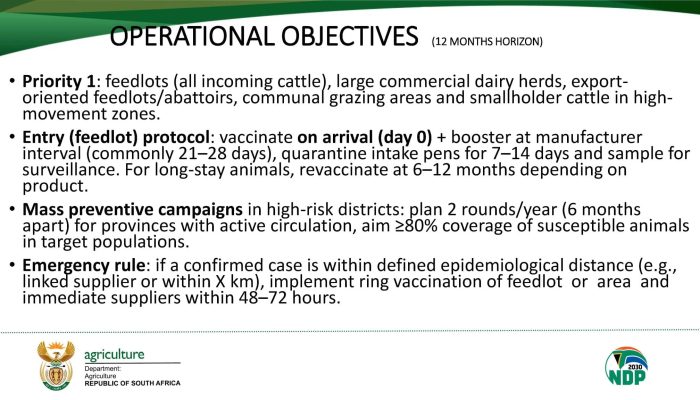
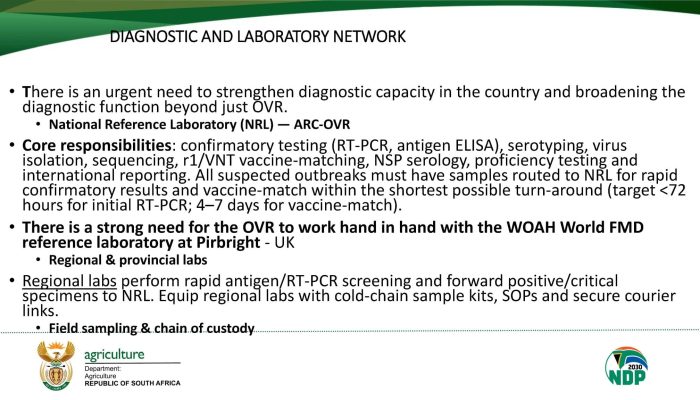
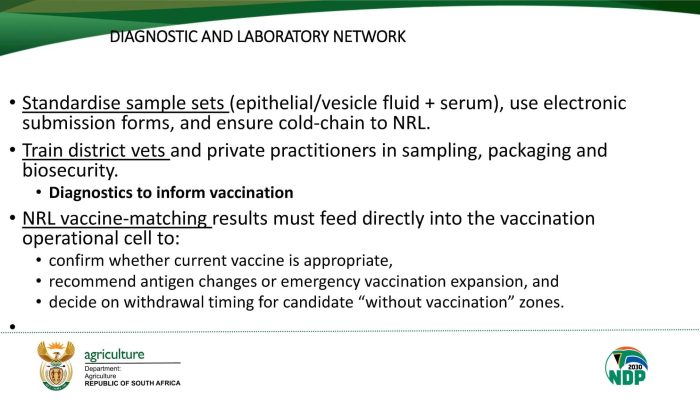
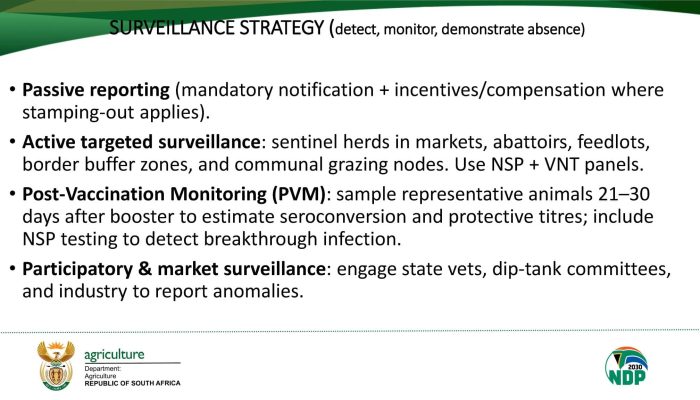
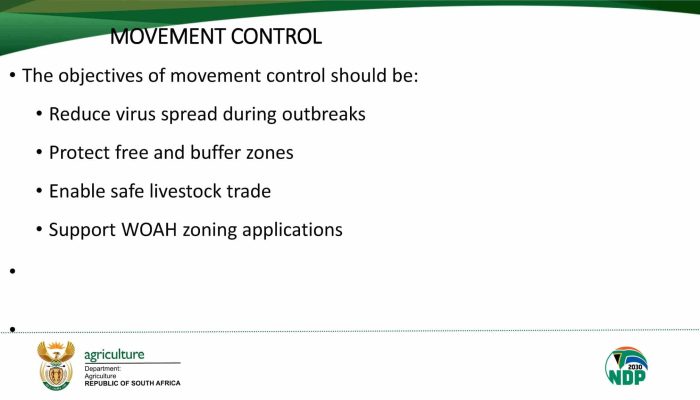
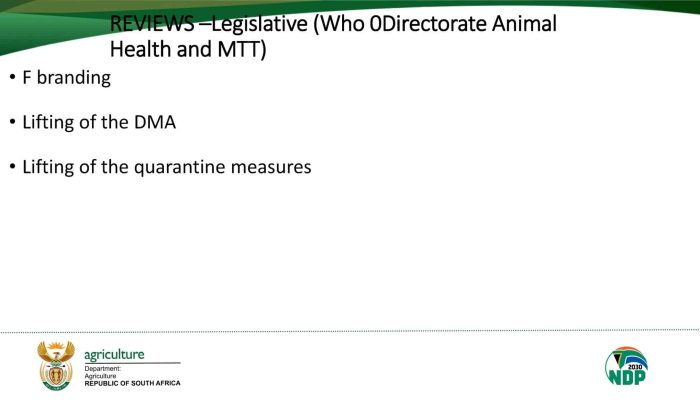
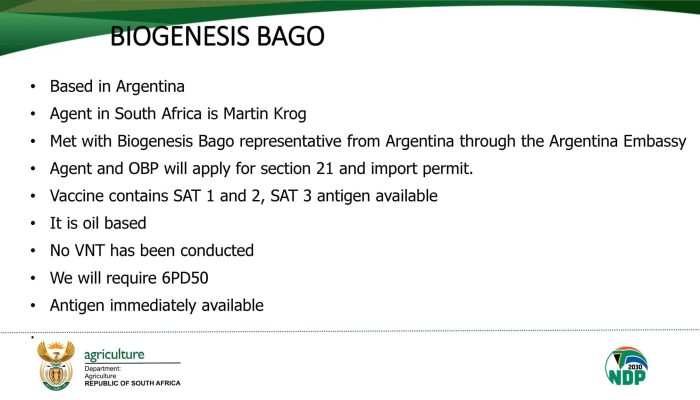
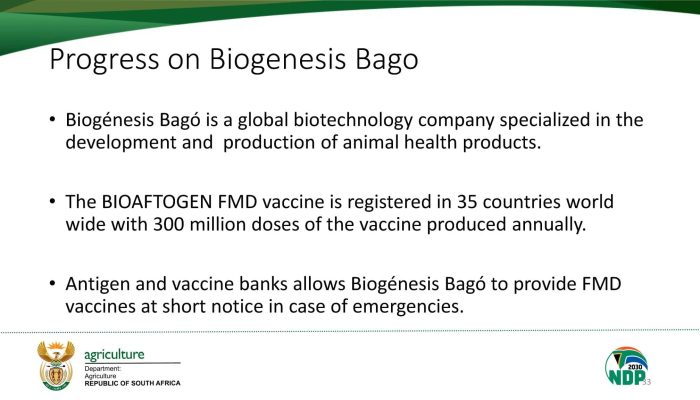 The slideshow presented by Dr Emily Mogajane, chief director of biosecurity coordination at the Department of Agriculture.

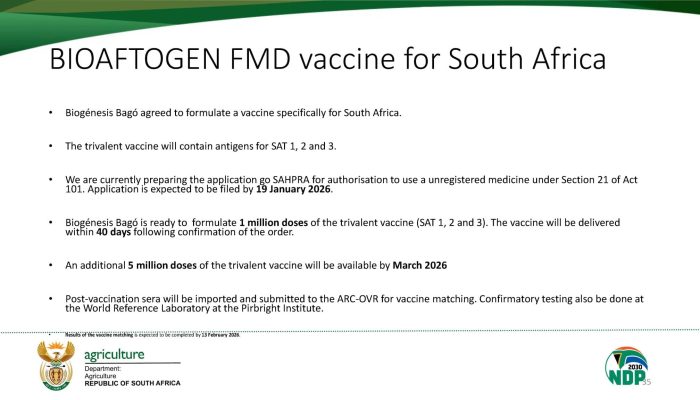

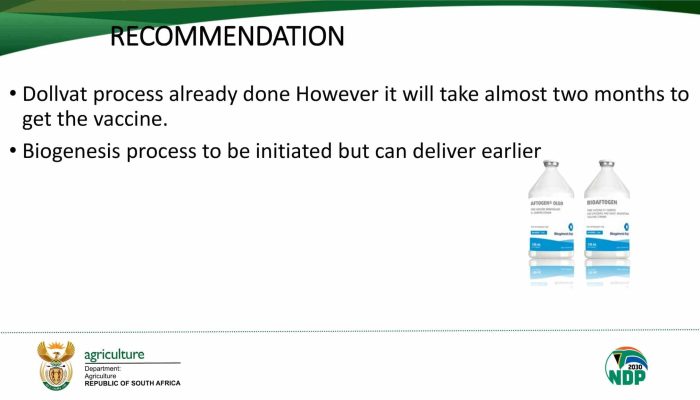






Dairy industry welcomes announcement
Nico Fouché, CEO of Milk SA, welcomed the minister’ s announcement and wished him and the department luck for the task ahead. South Africa’s milk producers are world leaders on all fronts, from genetics to milk quality, and for decades government did not support the industry adequately.
“Over the past four years we saw FMD spread like wildfire. Farmers’ wallets have been bled dry and the situation continues,” Fouché said, adding that one could not begin to fathom the incalculable fear and emotional price that farmers, their families and workers have paid. “Our hearts truly go out to every individual affected by the disease.”
Fouché said it was not a good idea to dwell on the past but rather focus on the future; government and the private sector need to work together. He also extended a special word of thanks to the Milk SA working group under the leadership of Dr Mark Chimes and the country’s private veterinarians who selflessly give their time to help industry cope with the challenges of the crisis.
Red meat farmers remain uncertain
Dr Frikkie Maré, chief executive officer of the National Red Meat Producer’s Organisation (RPO), said the organisation welcomed any strategy aimed at curbing and addressing the devastating FMD outbreak. “However, while the minister and Dr Emily Mogajane, chief director of biosecurity coordination at the Department of Agriculture, outlined their vision and promised to share a detailed plan, the confusion and uncertainty regarding the way forward remain.”
Since the media briefing, the RPO has received numerous queries from producers who are as confused now as they were before. “While we understand that the media briefing outlined the broad framework of the strategy, the devil is in the details, and details are what is needed now,” Dr Maré said. “We agree with most of what was said during the media briefing, but in reality it seems more like a wish list. Mention is made of goals, planned discussions and possible dates, yet there is still no concrete plan on the table.”
Dr Maré said it seems that there is a disconnect between the department and what is happening on the ground. “One example is the mention of the Eastern Cape, where FMD is currently under control; fact is, there have been four confirmed new outbreaks and ten more pending results. Mention was made of consultations with industry, yet we aren’t aware of any consultative meetings with the major commodity organisations in the livestock sector.”
Steenhuisen’s comment that the ministerial task team reports directly to the Livestock Value Chain Roundtable (LVCRT) was also erroneous, Dr Maré argued. “The RPO is part of the LVCRT, and to date no report has been given. It wasn’t even mentioned during the September meeting, and although the December meeting was cancelled a day before the scheduled time, it was not included on the agenda.”
Dr Maré said one thing the RPO is proud of is the fact that the meeting the organisation arranged between the ministerial task team and Biogénesis Bagó, the vaccine manufacturer from Argentina, was a success. “It is, however, quite ironic that we need to hear about it during a media briefing by the department. A bit of feedback after the meeting, which the RPO arranged, would have gone a long way.”
Science-based strategy welcomed
Willem de Chavonnes-Vrugt, president of AgriSA, said the improved national response to FMD was welcome and reaffirmed confidence in the agricultural sector’s long-term resilience.
He added that the updated strategy reflects a more coordinated, risk-based and science-driven approach to vaccination, surveillance, movement control and zoning, which are essential for containing the disease and restoring confidence in the livestock industry.
AgriSA strongly supports industry-led interventions driven by commodity organisations across the livestock value chain, De Chavonnes-Vrugt said, adding that these efforts will be instrumental in limiting the further spread of FMD and maintaining market access under extremely difficult conditions.
While the current crisis remains serious, AgriSA remains confident in the long-term ability of South African agriculture to regain its FMD-free status. The sector has repeatedly demonstrated resilience amid drought, disease outbreaks, and infrastructure constraints.
Action demanded
The Southern Africa Farmer Initiative (Saai) stated that the minister’s announcement failed to present the necessary solutions for farmers who are currently facing a survival crisis. It said the announcement raised more questions than answers. Farmers expected firmer, more decisive, clear, and practical action to get their farming operations back on track and to gain certainty as to how the national control strategy will be rolled out.
Saai says farmers’ trust in the department is currently at a low. “The industry is expected to believe that the very officials who caused the crisis must now lead them out of it,” Saai wrote in a press statement. “There has been no indication of consequences for officials who failed to safeguard the integrity of control measures or to ensure the availability of vaccines.”
While the organisation welcomed the fact that vaccines would also be sourced from Brazil and Turkey, it is critical that the country gets as much vaccine as possible, as quickly as possible. “If the state does not urgently supplement its capacity to produce locally developed vaccines by outsourcing production to private laboratories, the organisation will be compelled to force the state to do so through legal action.”
Farmer and consumer crisis
In a press statement TLU SA said FMD has reached crisis levels and is out of control. This undermines farming income, food security, and South Africa’s ability to export livestock products.
At the root of the problem was not a lack of plans, but rather government’s inability to follow through on strategies. Communication, declarations, and long-term strategies are not helping famers who are losing their herds, contracts, and financial right to existence. The organisation added that the crisis also affected South African consumers, because meat prices have skyrocketed and this threatens food security.
Whereas the private sector has capacity, expertise and infrastructure to solve the crisis, the political will is seriously lacking. Bennie van Zyl, manager of TLU SA, said time is a luxury that the country does not have. He added that Brazil with its 240 million head of cattle was able to control FMD. Surely, South Africa with its national herd of approximately 14 million animals should also be able to control the disease. – Susan Marais, Plaas Media
