Estimated reading time: 5 minutes
The Minister of Agriculture, John Steenhuisen, has officially announced that South
Africa has resumed the submission of foot and mouth disease (FMD) field strains to
the Pirbright Institute in the United Kingdom. This marks the first time since 2011 that
the country has sent FMD field strains to this global authority.
International cooperation
The Pirbright Institute serves as the World Reference Laboratory for FMD.
While Pirbright does not manufacture vaccines, its role is critical: it tests whether
current vaccines around the world actually “match” the specific virus strains
circulating in the field.
It is important to note that over the last year, the Department of Agriculture sent
several other materials to the Pirbright laboratory as part of the routine material
sharing by the World Organisation for Animal Health (WOAH) reference labs, with
the most recent being in the last quarter of 2025. The reason WOAH reference
laboratories share circulating strains of pathogens is to update each other’s
catalogues for reference purposes.
By sending our latest FMD virus strains to Pirbright, South Africa is ensuring that the
millions of vaccine doses being procured are scientifically proven to protect our
national herd, Minister Steenhuisen said.
Beware of fake news
Minister Steenhuisen also wants to caution farmers and agriculture stakeholders
against fake news doing the rounds that the FMD strains were sent to the wrong
laboratory division of Pirbright. “The virus strains were sent to the correct laboratory”.
On the waybill, it states it is sent to the ‘Non-Vesicular Disease Reference
Laboratory’. The department has previously sent all its materials to this branch, as it
is the administrative receiving point.

Pirbright does not assess correctness based on the waybill but looks at the declared
pathogen, biosafety category, submission documentation, and temperature/chain-of
custody records. On arrival, material is triaged and routed internally to the correct
reference laboratory. If there were any concerns about misrouting, Pirbright would
immediately flag it.

Strategy for FMD Freedom
Sending the FMD virus strains to Pirbright is an important part of the Department of
Agriculture’s new 10-Year FMD Eradication Strategy, which aims to transition South
Africa to “FMD-Free Status with Vaccination”. The strategy moves away from
temporary crisis management toward a permanent, technical solution.
The immediate phases of the strategy include:
Phase 1: Stabilisation (Years 1–2): Intensive mass vaccination in high-risk hotspots
in provinces. The goal is to reduce outbreak incidents by 70% within the first year.
Targeted Vaccination: We are prioritising high-risk zones, with the goal of reaching at
least 80% coverage in targeted cattle populations, especially in the communal areas
and up to 100% in feedlots and dairy cows. The objective is to reduce outbreak
incidence within 12 months by more than 70% in the high-risk provinces through
systematic vaccination and preserve FMD-free provinces through buffer vaccination
and strict movement controls.
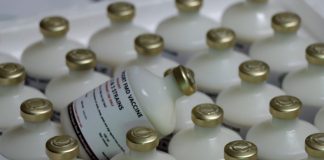
High-quality vaccines with high potency will be used during the campaign. We have
three suppliers, Biogénesis Bagó in Argentina, Dollvet vaccine from Turkey, and BVI
from Botswana.
“On Thursday, I met with the Argentine Ambassador, H.E. Raúl Ailán, to align on our
national strategy to achieve FMD disease-free status with vaccination. The
management team from Biogénesis Bagó accompanied the ambassador and
assured me they are able and ready to supply us with their high-quality vaccine as
soon as their import permits are finalised by the South African Health Products
Regulatory Authority (SAHPRA). Argentina’s success in this field is a blueprint for our
own roadmap, and I welcome the learnings from people who have walked the path
before,” the minister said.
Biogénesis will also be able to supply one million doses by mid-February and an
additional five million doses by mid-March 2026. Locally, we are activating a
production line through the ARC and OBP, which will initially produce 20 000 doses
per week, scaling up to a capacity of 960 000 doses.
The ARC is bringing its production forward and will be able to supply 12 000 doses to
our vaccine pool by mid-February.
The department is expecting to receive 1,5 million doses of vaccine from Dollvet in
mid-February – the s21 permit from SAHPRA has been received, and we have
issued the s20 permit for experimental/research import of the vaccine.
The BVI will supply 700 000 doses of vaccine by 1st of March 2026.
Phase 2: Consolidation (Years 2–4): Establishing secure buffer zones and certified
“compartments” to protect disease-free provinces like the Western and Northern
Cape, allowing for the resumption of safe international trade.
Phase 3 & 4: Recovery (Years 4–10): Gradual withdrawal of vaccination in specific
zones and applying for formal recognition of FMD-free status from the World
Organisation for Animal Health (WOAH). – Department of Agriculture press release