
Estimated reading time: 6 minutes
Backgrounding, according to Johannes Mulder, a beef cattle consultant at Intelact Beef, refers to a stage in the beef cattle production process during which young animals, typically recently weaned calves, are placed in a feeding programme primarily aimed at preparing them for finishing, either in a feedlot or on grazing. This phase occurs after weaning and before finishing.
The goal of backgrounding is to help calves transition from a roughage-based diet to a diet high in energy, and to support optimal growth, and overall health and efficiency.

Different systems
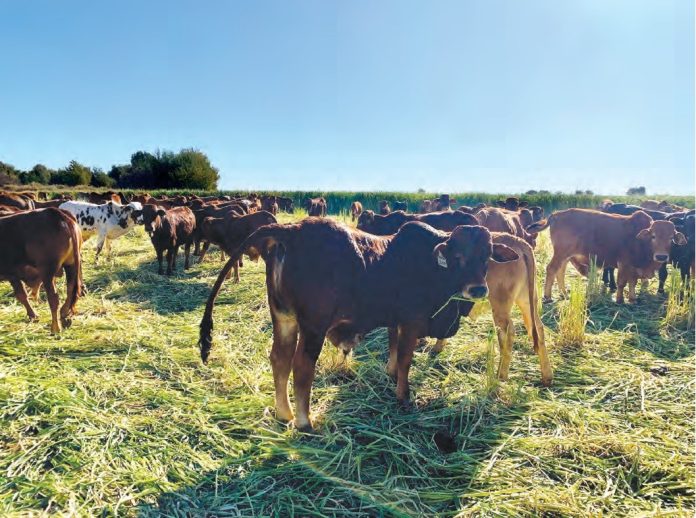
There are basically two backgrounding systems and choosing which one to use will depend on whether the producer farms in a summer of winter rainfall region. The first is a pasture-based system which involves running cattle on green grazing during the feedlot preparation phase. Animals will sometimes receive supplementary feed such as grain or protein supplements to support growth and development.
The second option is a kraal-based system in which cattle have access to only a small area; this allows for meticulous ration management. Moreover, with this system feed consumption is controlled and individual animals are closely monitored.
While most producers sell their weaned calves to feedlots for backgrounding, producers can benefit from doing this themselves if the situation allows. However, it is crucial that producers do their homework and prepare well before attempting such a project.
“For instance, a producer might choose on-farm backgrounding if there is enough high-quality greenfeed available which can be utilised profitably. During last year’s low weaner calf prices, we advised clients to retain their calves and do their own backgrounding, rather than selling their animals at low prices. This allowed them to add more kilograms to the calves and sell them when prices are traditionally higher,” says Mulder.
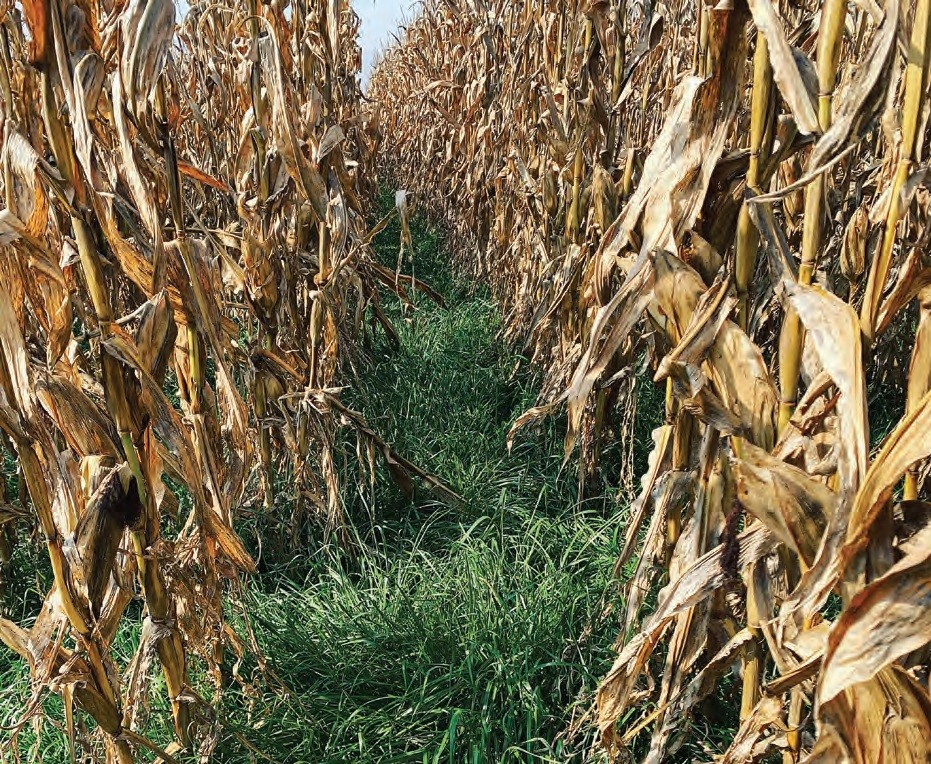
The producer’s financial situation naturally influences this decision, along with the availability of high-quality greenfeed. “It is of course an option if the producer is prepared and equipped to not only background his/her calves, but also to purchase more calves to add value to the grazing.”
Summer calves
In the summer rainfall region, calves are usually weaned from March to June, Mulder explains, and it is to the producer’s advantage to sell his/her calves that weigh less than 200kg and retain the heavier calves for backgrounding. This is because, while everyone else is weaning, the heavier calves are typically penalised on price.
“We recommend putting the retained calves on a backgrounding programme and taking them through to the last week of November or the first week of December. What you will get in the end is a finished calf that weighs between 400 and 480kg, which is ideal.”
By adopting this approach, producers benefit from securing the best price for calves that weigh less than 200kg. At the same time, they can add kilograms to their heavier calves at a relatively low cost. This places the calves in a different category as they are then marketed as slaughter-ready animals during a period when demand is higher.
Winter calves
A vastly different strategy is followed if calves are born in autumn in the summer rainfall region and weaned in October and November, he explains.
“In this scenario, you should sell 40% of your heaviest calves as well as 10% of your lightest calves. The remaining animals will utilise the summer grazing until February when you sell them as yearlings weighing approximately 240kg. This timing aligns with the approach of the autumn weaning period when prices traditionally peak.”
Conditions for success
To ensure the success of either of these strategies, producers need to heed specific conditions. “When it comes to the weaning of calves in autumn, we recommend utilising a cultivated greenfeed system and combining it with an energy lick. This is a cost-effective option because the greenfeed will cost you less than feeding a grain-based ration.”
Success is also contingent on available cash and feed resources. “Not being sure whether your cashflow allows for the retention of animals can lead to sizable losses. Calf performance is directly dependent on the quality of both the calves themselves and the greenfeed. As a rule of thumb, we can use growth of 1kg/day in the calculation to determine profitability, with a minimum of 750g/day,” Mulder explains.
When it comes to fodder flow, you need to make sure there is enough greenfeed available in winter, and the same for pasture during summer, to accommodate the retained calves. The exercise makes no sense if the rest of your livestock have limited access to enough feed to sustain themselves.
Timing is equally important, he says. You cannot apply a system on your farm that prohibits you from marketing your animals when prices are at their highest. This is especially applicable to calves marketed in February.
“When buying in calves, target those that weigh 200kg and more. Lighter calves, especially those weighing less than 180kg, may have a high mortality rate, affecting the profitability of the project. Avoid excessive weight variations within your group because the heaviest calves will then be market-ready when prices are far from ideal. As a practical approach, do some research on the price trends in your immediate vicinity to determine the ideal marketing period.

Price trends
As a general guideline, Mulder says, weaner calf prices usually decline from March to June, as the majority of calves born in spring are marketed during this time. From July onwards the price increases, reaching a peak from October to December. From February onwards the price starts dropping once more, repeating the price cycle.
“While this trend can move backwards or forwards a few weeks from year to year, the basic trend has remained consistent over the years. Therefore, it makes sense to purchase calves when prices are lower.
“If you do buy in calves, consider buying locally as this simplifies their adaptation. Furthermore, it is preferable to opt for calves from producers with a proven record of good herd management, and specifically good herd health management, which will give you peace of mind that animals have been vaccinated regularly and on time.”
Backgrounding, Mulder concludes, can potentially be an excellent value-adding instrument on a farm, but producers need to do their research and consider available resources, cashflow, management goals, and market conditions. – Izak Hofmeyr, Stockfarm
For more information, contact Johannes Mulder on 063 690 9487 or at johannes.mulder@intelact.com.
