Estimated reading time: 5 minutes
The 32nd Red Meat Abattoir Association (RMAA) expo and conference held in Somerset West recently, highlighted the resilience and adaptability of South Africa’s red meat industry in the face of ongoing foot-and-mouth disease (FMD) challenges.
The conference reflected on the changing production landscape, disease pressures such as FMD, and growing expectations around food safety, traceability, and biosecurity. In his online opening message, president Cyril Ramaphosa emphasised the importance of continued collaboration between government and industry to ensure South Africa remains competitive and compliant in both domestic and international markets.
Building resilience through collaboration
The past year has tested the resilience of the red meat industry, and presentations accordingly focussed on aspects such as animal welfare, food safety, traceability, quality assurance, market access, and export growth.
Stefan Sutor, a German slaughter industry executive and animal welfare specialist, addressed international animal welfare trends, while Gerhard van der Burgh, senior analyst at the Bureau for Food and Agricultural Policy (BFAP) and a contributor to the Red Meat Industry Strategy 2030, highlighted the importance of market development and competitiveness.
Wandile Sihlobo, chief economist of Agbiz and a member of president Ramaphosa’s presidential economic advisory council, provided an overview of the economic opportunities and challenges facing South African agriculture.
Dewald Olivier, chief executive officer of Red Meat Industry Services (RMIS), outlined progress with the Red Meat Industry Strategy 2030, the development of national traceability systems, and collaborative initiatives to strengthen the sector’s competitiveness and sustainability.
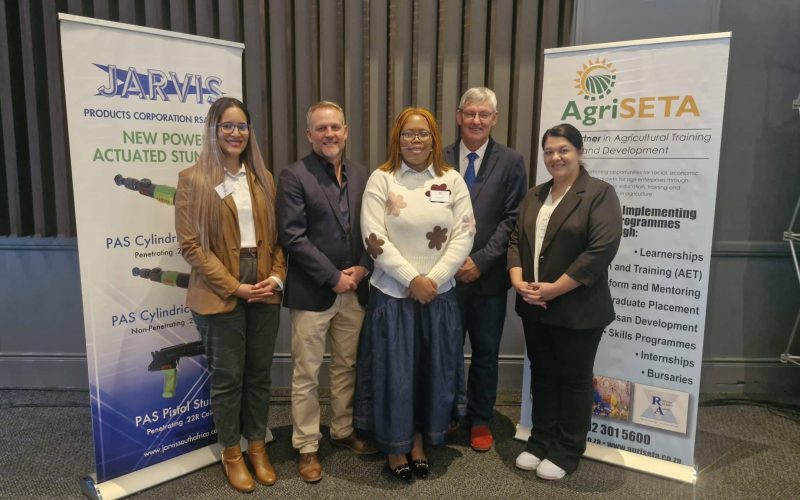
Dr Mphane Molefe, director of veterinary public health at the National Department of Agriculture, provided an update on South Africa’s meat inspection system and ongoing efforts to strengthen food safety, animal welfare, and regulatory compliance throughout the meat value chain, while Prof Armanda Bastos, professor in the Department of Veterinary Tropical Diseases, presented research that could influence future FMD-related slaughter protocols and reduce unnecessary losses. Industry supplier Jarvis, represented by Bendeon Myburgh, showcased processing technologies that continue to improve operational efficiency across the sector.
Progress despite unprecedented challenges
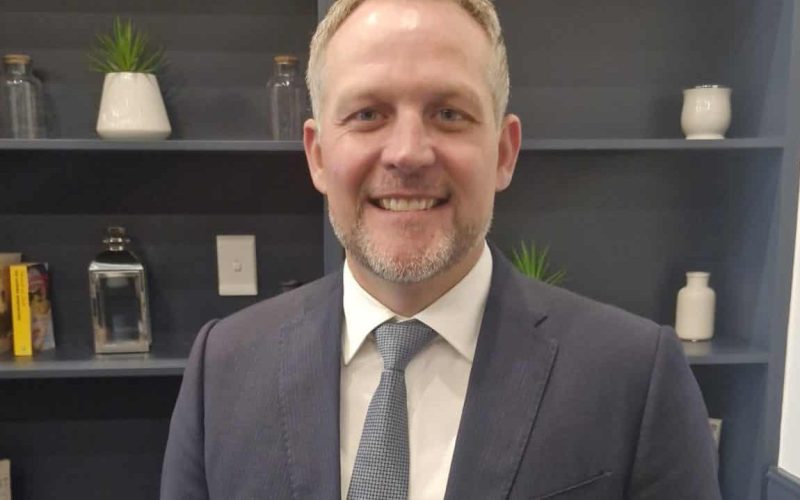
According to Niel Venter, re-elected RMAA chairperson, the conference was particularly relevant as the industry continues to adapt to a rapidly changing environment. Over the past year, the sector has faced slaughter disruptions following FMD outbreaks, livestock supply constraints, rising operating costs, lower slaughter numbers, and the loss of export status for some facilities.
“FMD has placed considerable pressure on everyone involved in our industry,” he said. “Yet these challenges have also demonstrated the resilience and determination of our industry. While FMD has dominated much of our attention, we must remain focussed on the long-term sustainability of our businesses.”
He noted that close collaboration among industry, government, and veterinary authorities has helped maintain red meat supply and preserve market access. Scientific research has also played a critical role in informing practical policy decisions. “If someone had told us a year ago that the red meat industry would help drive science-based policy reforms, support a national vaccination programme, and achieve the designation of more than 25 high-throughput FMD abattoirs, many would have struggled to believe it. Today, we can reflect with pride on what has been achieved.”
Moving forward
Key milestones since the previous congress included the launch of the RMAA training programme, industry agreement on vaccination as part of the FMD response, the importation and rollout of vaccines, revised controlled-slaughter requirements, export preparations for the United Arab Emirates, approval of five designated FMD abattoirs for export, and South Africa’s first exports of vaccinated cattle to Jordan.
A significant achievement was the successful negotiation of a veterinary health certificate that enables exports of vaccinated livestock, including animals that have recovered from FMD and are clinically healthy at slaughter.
“This milestone demonstrates continued international confidence in South African red meat and confirms that our products remain safe and trusted when supported by appropriate risk mitigation measures,” said Venter.
Through bilateral negotiations led by the Department of Agriculture and supported by industry stakeholders, export accreditation has already been reinstated for five abattoirs. However, Venter cautioned that continued collaboration will be essential to restore exports to previous levels and regain access to key international markets. He also thanked state veterinarians, government officials, abattoir owners, and industry stakeholders for their contributions during a challenging period. He also acknowledged the leadership of Dr Gerhard Neethling and Dr Shayna Louw, RMAA veterinary public health technical veterinarian.
The RMAA continues to support its members through training, FMD designation and export applications, technical guidance, and representation at industry forums. Collectively, the presentations reinforced the importance of collaboration, science-based decision-making, and innovation in ensuring the sustainability, competitiveness, and global reputation of South Africa’s red meat industry.
Revision of veterinary health certificates
The Market Access Working Group of the ministerial task team for controlled animal diseases has been working closely with the Department of Agriculture to revise veterinary health certificates for the export of FMD-vaccinated cattle, simplify implementation requirements, and facilitate the use of authorised private veterinarians to support export certification.
The registration of designated FMD abattoirs has enabled continued slaughter for normal meat production despite severe livestock supply constraints. Industry also received feedback on alternative risk-mitigation measures for suspected FMD lesions detected at abattoirs.
Research presented by Prof Bastos provided evidence that carcasses from recovered and vaccinated animals present a significantly lower risk than is currently reflected in some mitigation measures. The industry is now awaiting the publication of the Section 9 FMD management plan, which is expected to provide greater certainty on local and international meat production during the ongoing outbreak.
For more information, contact the Red Meat Abattoir Association on 012 349 1237 or send an email to info@rmaa.co.za – Carin Venter, Plaas Media